Newsletter
Newsletter
Visit here to subscribe to the ACBS Official Newsletter.
Note: If you are an ACBS member, you will be automatically subscribed to the monthly newsletter. To be removed from this email list, email [email protected] at any time.
2020 Developing Nations World Conference Scholars
2020 Developing Nations World Conference ScholarsCongratulations to the 2020 Developing Nations Scholars. The Developing Nations Committee provides scholarships to attend the ACBS World Conference to ACBS members who are from emerging economy countries and who would not be able to attend without this added financial support. Click here to read more about the Developing Nations Scholars program and donate to the Developing Nations Training Fund.
Ceri Lan - Malaysia
Ceri Lan is a passionate mindful humanitarian who deeply cares for human suffering equally as human well being. As a meditator and a mindfulness practitioner for over 10 years, she is the co-founder of Mindful-Nest, a space for unique meditative experience, authentic conversation and deeper self- awareness. She is currently pursuing her Master's in Counseling Psychology at HELP University, Malaysia for her calling to serve humanity. Her passion lies in individuals, as each of us is the living cell that duplicates life. Her scientific interest is in Self Leadership, building the self based on a functional contextual approach. In spreading awareness on Acceptance and Commitment Therapy (ACT) and Self Leadership, she actively delivers talks and conduct workshops to the general public and universities locally and internationally. She sees ACT beyond science and a therapy approach. She believes it is also a way of life as she adopts this intervention into her counseling and social works. Most importantly, ACT is the way she lives her life. She is from Hanoi, Vietnam.
Abu Onesimus Bockarie - Sierra Leone
My name is Rev. Abu Onesimus Bockarie. By the grace of God I am the founder and General overseer of Better Hope Ministries with its headquarters in Bo City, Sierra Leone, west Africa. I am an Acceptance and Commitment Therapy (ACT) trainer trained by commit And Act Foundation in Sierra Leone.
Emina Osmanovic Basic - Bosnia and Herzegovina
Emina Osmanovic Basic is a cognitive-behavioral therapist (CBT), working with clients in Bosnia and Herzegovina for more than five years.
Before starting Association “ABC” (http://psiholoskosavjetovaliste.ba/) with her colleagues, with the aim of providing psychotherapy and speech therapy services, Emina worked as a psychologist at a primary school in Sarajevo and spent several years working in two non-governmental organizations. After successful and significant work with vulnerable and disadvantage groups such as victims of sexualized and domestic violence at the Safe house “Medica”, and parents of children with developmental disabilities in the NGO “Dajte nam sansu”, Emina works now as a psychotherapist treating problems such as anxiety, depression, low self-esteem etc.
After several years practicing traditional cognitive-behavioral therapy (CBT), Emina has now become more focused on applying ACT interventions in her work.
Emina has several published research projects concerning target groups and the problems she has encountered during her work.
2020 Diversity, Equity, and Inclusion World Conference Scholars
2020 Diversity, Equity, and Inclusion World Conference ScholarsCongratulations to the 2020 Diversity, Equity, and Inclusion World Conference Scholars. The DEI Committee provides scholarships to attend the ACBS World Conference to members who are from varied backgrounds and who would not be able to attend without this financial support. Click here to read more about the Diversity, Equity, and Inclusion World Conference Scholars program or to donate to the Diversity, Equity, and Inclusion Committee Fund.
Fady Safwat - Egypt
Dr Fady, is a young established psychiatrist from Egypt. He is interested in introducing ACT for adolescents, especially those who battle with gaming addiction. He is starting a small ACT based group for young adults called TELOS.
Desmond Bull - Sierra Leone
I am Desmond Bull. I am originally from Sierra Leone, West Africa. I have been working as a Registered Behavioral Therapist in Washington, DC for close to a year now. Implementing ABA instructions has ushered me to new knowledge, even as I am pursuing an Information Systems degree at Bowie State University. I hope to infuse both disciplines to create an automated, interactive therapeutic application for managing autism in children and adults.
Nguyen Tran - Vietnam/USA
Hello, my name is Nguyên and I am originally from Ho Chi Minh City, Vietnam. I am currently a Clinical Research Coordinator at Seattle Children's Hospital. I'm involved with multiple research projects that seek to develop innovative treatments for families with ADHD children. I am also working with Dr. Jonathan Kanter on a research project focusing on LGBT microaggressions and ways to reduce them. Just a bit on my background, I've been living and working in Washington state since 2007. I graduated from Seattle University in 2015 with a degree in psychology and a minor in chemistry. Right after school, I was a clinical case manager at Asian Counseling Referral. During this time, I was introduced to ACT and immediately was hooked. I joined the local WA ACBS chapter and have been active ever since. My research interest is a psychological intervention in social justice context. Hopefully not too long from now, I will pursue a Ph.D. in clinical psychology. I'm very excited to attend the ABCS Conference 2020 and look forward to embracing the experience and community.
Sandi James - Australia
Sandi James is an Australian registered psychologist with more than 10 years working in mental health and addiction treatment. Her primary interests lie in mental illness and trauma recovery, with a particular focus on individuals with co-morbid presentations. She is a qualified Cognitive Behaviour Therapist, Acceptance and Commitment Therapy (ACT) clinician and Dialectical Behaviour Therapy (DBT) practitioner. Sandi was employed at the Universiti Malaysia Sabah for 2 years prior to relocating to Thailand to pursue further clinical expertise and practice in addiction and trauma treatment. Sandi is also a Scientific Writer for The Joanna Briggs Institute, writing evidence summaries in the areas of Public Health and evidence based medical practice. Sandi is currently undertaking her PhD candidature in the school of Social Work and Social Policy with La Trobe University, Australia. Sandi’s research focus is on the traditional use of alcohol in the indigenous communities of Sabah. Other research interests include evidence-based treatments for mental illness, ACT and Ultra Brief Psychological Interventions, collaborative health care provision, and alcohol harm reduction programs.
2020 World Conference Scholarships and Awards
2020 World Conference Scholarships and AwardsWomen of Color World Conference Scholarships
The Women of Color scholarship covers the full World Conference registration fee. Scholarships are funded by both the Women in ACBS Special Interest Group and ACBS.
Awarded by the Women in ACBS Special Interest Group. Read more about the Women in ACBS SIG.
Biana R. Augustine – Norfolk, VA, USA
Cortenee Boulard - Killeen, TX, USA
Jasmine Burton – Glen Burnie, MD, USA
Nancy Lee – Aurora, CO, USA
Marla Martinez-Parker – San Diego, CA, USA
Sehar Moughal - New Zealand
Puveshini Rao - Malaysia
Melody Sylvain - Marietta, GA, USA
Rebecca Wright - Jamaica, NY, USA
Awarded by the Association for Contextual Behavioral Science.
Rogéria Adriana de Bastos Antunes - Brasil
Marquita Carter - South Orange, NJ, USA
Amanda Casco - Buffalo, NY , USA
Lexi Chavez – Arvada, CO, USA
Aya Cheaito - Burlington, VT, USA
Zelda Fleming - Fairburn, GA, USA
Shana Harris – Coralville, IA, USA
Jennifer Kuo - Vermillion, SD, USA
Serena Wong - Bowling Green, OH, USA
Developing Nations World Conference Scholarships
ACBS is an international society but in many corners of the world it is difficult for professionals to attend ACBS conferences and trainings due simply to cost. The Developing Nations Fund helps disseminate CBS in the developing world and provides scholarships for attendees and presenters from developing nations to attend the world conference. We know that our members from diverse backgrounds contribute depth and richness to the organization and this program will lead to a better ACBS for all of us. Read more about the Developing Nations World Conference Scholarships.
Abu Onesimus Bockarie - Sierra Leone
Ceri Lan - Vietnam
Emina Osmanovic Basic - Bosnia and Herzegovina
Diversity World Conference Scholarship
The Diversity, Equity and Inclusion Committee is aiming to bring increased diversity to our annual conferences by providing funds for individuals who come from diverse backgrounds and who would not be able to attend an ACBS conference without this added financial support. Both trainees and professionals were eligible for this competitive award. Read more about the Diversity World Conference Scholarship.
Desmond Bull - USA
Fady Safwat - Egypt
Nguyen Tran - USA
Sandi James - Malaysia
ACBS Foundation Student Scholarship
A goal of the ACBS Foundation is to support existing activities within ACBS. The ACBS Foundation Student Scholarship enables students to attend the annual ACBS World Conference. The scholarship covers the full student conference registration fee. Read more about the ACBS Foundation.
Nadina Pantea - Romania
Alison Stapleton - Ireland
Student World Conference Scholarships
The mission of the ACBS Student SIG is to work to support students of contextual behavioral science by advocating for their professional and personal development and facilitating their contribution to ACBS and the larger community. One step in moving towards this mission has been to create a Student World Conference Scholarship that will help subsidize the costs of attending the annual ACBS World Conference. Read more about the Student World Conference Scholarships.
Rebeca Castellanos - USA
Joseph Lavelle - Ireland
Huiyuan LI - Hong Kong
Jill Loving - USA
Marissa Sbrilli - USA
Junior Poster Investigator Award
The purpose of this award is to recognize and help develop junior investigators conducting research in Contextual Behavioral Science and who are presenting the results of this research at the Association's annual world conference. Read more about the Junior Poster Investigator Award.
Mindfulness, Culture, and Clinical Practice: Clinician Experiences Utilizing Mindfulness and Acceptance with Hispanics/Latinos
Rebeca Castellanos, M.A., Medical University of South Carolina
Understanding attitudes and perceived behavioral responsibility towards global climate change through psychological flexibility processes
Carter Davis, B.A., Utah State University
Comparison of Metacognitive and Psychological Inflexibility Models of Emotional Distress
Huan Quan, M.A., Wichita State University
Appraising Anxiety as Problematic Increases Odds of Misusing Meditation Strategies Above and Beyond Transdiagnostic Processes and Symptomatic Distress
Max Roberts, M.A., University at Albany, State University of New York
Eric Tifft, M.A., University at Albany, State University of New York
Shannon Underwood, B.S., University at Albany, State University of New York
John Forsyth, Ph.D., University at Albany, State University of New York
Michael J. Asher Student Dissertation Award
This award is given to students based on their doctoral dissertation proposal related to the use of Contextual Behavioral Science with children/adolescents. It was named for Michael J. Asher, Ph.D., ABPP, who passed away in 2016. He was a clinical psychologist at Behavior Therapy Associates, P.A. since 1988. He served as Coordinator of Consultation Services and was Board Certified in Cognitive and Behavioral Psychology by the American Board of Professional Psychology. Dr. Asher was an Adjunct Associate Professor with the Department of Psychiatry, Rutgers Medical School where he supervised Psychiatric Fellows and taught Child Cognitive Behavior Therapy, and he was a field supervisor for the Graduate School of Applied and Professional Psychology at Rutgers University. Dr. Asher co-authored several books on the topic of behavior disorders and children. He was passionate about his work, loved psychology, cognitive behavior therapy, and especially enjoyed learning about and practicing Acceptance and Commitment Therapy (ACT). Dr. Asher greatly impacted the lives of many and his contribution to the field of psychology and education was significant. Read more about the Michael J. Asher Student Disseration Award.
Using Functional Analytic Psychotherapy to Develop Social Skills in Adolescents with High Functioning Autism (First Prize)
Olivia Gratz, Western Michigan University
Evaluating the Effects of an Acceptance and Commitment Therapy Behavioral Parent Training Program on Children with Autism Spectrum Disorder and their Parents (Second Prize)
Caitlyn Gumaer, Claremont Graduate University
A brief history of the ACBS BeNe Chapter
A brief history of the ACBS BeNe ChapterIn September 2010 the Belgium-Netherlands Chapter (BeNe Chapter) of the Association for Contextual Behavioral Science was founded. Starting from scratch with only a webpage for Dutch speaking members on the ACBS website, the Chapter grew to what it is today – a vibrant chapter with almost 250 members. The chapter now has a website with information for both clients and professionals. (www.ACBSBeNe.com)
The BeNe Chatper has a Board and several active committees (from the science committee to the PR-committee). The chapter also offers a wide array of workshops. Throughout the years, a variety of workshop topics were presented, such as ACT and pain; compassion; values; and “working with complex clients” by both renowned English- and Dutch speaking authors, therapists and researchers. In early 2019 a series of workshops on RFT by Yvonne Barnes-Homes et al. was launched, with a focus on experiential, clinical-technical and technical; like the HDML-model.
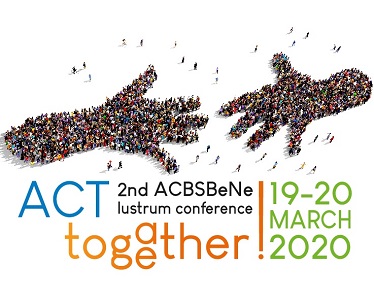
In October 2015; the chapter celebrated its first lustrum with a conference in The Netherlands. In March 2020, the chapter will celebrate its 10th anniversary in Antwerp, Belgium. We welcome you to join the BeNe Chapter in a 2-day conference on March 19 – 20, 2020, themed “ACT toge/ather.” This second conference of ACBS BeNe is dedicated to connect and deepen our knowledge and experience about ACT. The conference will feature Dutch and English speakers: Robyn Walser, Rikke Kjelgaard, Yvonne Barnes-Holmes and Ross White. Click here to learn more about the conference.
ACBS Australia-New Zealand Chapter Responds to the Australian Bushfire Emergency
ACBS Australia-New Zealand Chapter Responds to the Australian Bushfire EmergencyJanuary 7, 2020
Dear ANZ ACBS community,
We stand united with our entire community grieving the ongoing loss of lives, properties, flora and our precious wildlife, as the bushfire emergency continues across Australia. We share your fear, uncertainty, sadness and anger during this difficult time. We also stand side-by-side with the many members and their families who have been personally and directly affected by the bushfires. Finally, we recognise the wide ranging impact of this disaster more broadly, such as the known impact on the skies and glaciers as far as New Zealand. As a Board, we have been considering how our ANZ ACBS community best be part of the mental health response, as well as more broadly supporting facilitating action in response to the worldwide climate emergency. We know that there are immediate needs and many of our members are wanting to take proactive steps right now.
We have decided, at this time, that there are three ways ANZ ACBS as an organisation can facilitate responding:
- If any of our Australian rural members hear of further requests for trauma counsellors, in a paid or pro bono capacity, please contact us, and we will help spread the word to mobilise those in our membership who are trained for these responses.
- We would like to coordinate the provision of supervision and support to our Australian members who are providing services to those impacted by this ongoing, unprecedented natural disaster. We are calling for ANZ ACBS members who are not directly working with people impacted by the bushfire emergency, but who have a willingness, skills and capacity to offer supervision and support to those who are doing this work. We are asking for those people to be able to volunteer at least six hours, over a period of up to one year. If this is you, please email us with the subject line “I can help”. If you are directly involved in service provision to those affected by the bushfires, and you would like to access this supervision/ support service for yourself, please email us with the subject line “Please help me”.
- In the coming weeks and months, we hope to work with members with expertise and experience in working with trauma associated with natural disasters, working with those affected by the climate emergency and in taking action around the climate emergency to put together CBS informed resources to help provide guidance to members. If you are willing to help us with any of these, please email us.
Let’s stay in touch as a community so that always going forward we can be agents for change. We encourage members to share, via our Facebook group, any actions that you may be taking as an individual in response to the bushfires or the climate emergency more generally; that we may learn from you, and be inspired to step out right alongside you. We also welcome any further suggestions about how we can use our knowledge and skills in behavioural science to help others, and help influence positive change.
Sincerely
Daniel, Tiff, Lisa, Andrew, Farah, Kali, Sarah, Jennifer, Shelley, Karen, Nathan and Claire.
The ANZ ACBS Board of Directors
Australia-New Zealand (ANZ ACBS) Chapter Links
- Webpage on ACBS website
- Official ACBS ANZ Chapter Website
- Join the ANZ Chapter's mailing list
- Facebook group
- Twitter @ANZACBS
- LinkedIn @ANZACBS
Alert: "Counselor Needed" Scam
Alert: "Counselor Needed" Scam“Counselor Needed” scam – Please tread carefully
We want to notify you that ACBS has received a few reports from members of a scam that is being emailed through our website. We’ve also learned that we’re not the only psychology association in this situation.
The ACBS website has safeguards in place to help limit the quantity of emails that can be sent, as well as the timing, so as to help stop scam emails from coming through. However, depending on how they are sent, we unfortunately can’t stop all of them. In case you are unaware of these scams, we just wanted to explain how some of them work. The person often requests services very soon and attempts to push things through quickly. They then want to pre-pay, often with a credit card or check, but sometimes through other means. The payment will be for the amount due, or for too much money. They will then cancel and request a refund typically in a different way (like they pay by credit card, and ask for the refund as a check or bank transfer). Assuming that the money is stolen (stolen credit card), you have now “refunded” to a different account. When the credit card company or bank follows up with you on the unauthorized charge, you no longer have the funds, but they will still be taken back from you by the credit card company or bank.
The vast majority of the emails you might receive via the ACBS website (via your personal contact form) are from legitimate members or legitimate potential clients. However, the emails are not previously vetted for their veracity. If you would prefer to NEVER receive an email via the ACBS website from a member of the public or another ACBS member, please login at https://contextualscience.org/user then click on “My Account” at the top of the page, then click on “Edit”, then uncheck the “Personal contact form” check box at the bottom of the page and click “Save”. Changing your account this way does not change your ability to receive ACBS listserv posts, newsletters, or other direct communications from ACBS.
If you have questions or need help, please contact ACBS staff at [email protected]
Thank you,
Emily Rodrigues, Executive Director
(This webpage was updated on May 25, 2018)
Conference Strategy Committee
Conference Strategy CommitteeThe ACBS Conference Strategy Committee is responsible for meeting the organization’s research and training objectives as they relate to ACBS's World Conference. The Conference Strategy Committee recommends future ACBS World Conference locations, evaluates venue proposals, and chooses future conference sites, with final approval reserved by the ACBS Board. The committee members are tasked with thematic determinations, plenary speaker recruitment, conference structure determination (timing, length, etc.), and other related conference decisions. The committee members act as a resource for the conference program chairs.
An important part of the Conference Strategy Committee’s job is determining the Pre-Conference Workshops. Each year, the Conference Strategy Committee spends about 4 months soliciting, evaluating, and selecting the 10 Pre-Conference Workshops to be held at the annual World Conference. The obligation is to balance - (1) diversity, (2) training level from basic to advanced, to cutting edge, (3) variety of models - ACT, RFT, CFT, FAP, DBT, etc., (4) client groups - adults, children, adolescents, organizations, health, etc., (5) organizational strategy and support for CBS vision, (6) mentoring new people, (7) past opportunities to present, (8) quality level, and (9) financial viability.
The committee is comprised of permanent members and rotating members. Each rotating member serves a 2 year term on the committee. The ACBS Board President, President-Elect, and the Program Chairs for the next two World Conferences serve as rotating committee members.
2019 ACBS Conference Strategy Committee permanent members:
Manuela O’Connell, Committee Chair
Sonja Batten
Aisling Leonard Curtin
Andrew Gloster
Louise Hayes, ACBS Board President
Steve Hayes
Louise McHugh, World Conference 17 Program Chair
Miguel Rodriguez Valverde
Robyn Walser
Rotating members:
David Gillanders, World Conference 17 Program Chair
Matt Bonne, World Conference 18 Program Chair
Jennifer Gregg, World Conference 18 Program Chair
Dennis Tirch, ACBS Board President-Elect
Continuing Education (CE) Committee
Continuing Education (CE) CommitteeThe Continuing Education (CE) committee shall be responsible for staying abreast of industry guidelines on Continuing Education. The committee also evaluates ACBS events and co-sponsor training events for CE suitability and approval.
ACBS is approved by the American Psychological Association (APA) to sponsor continuing education for psychologists. We offer the opportunity for non-profit associations and the general public to hold training events where they are able to offer CEs for Psychologists through ACBS. In order to do so, an organization or individual must complete the Co-Sponsor Application Form and then be approved by the Continuing Education Committee of ACBS. You can read about CE co-sponsorship on the ACBS website. https://contextualscience.org/acbs_CE_co-sponsorship
The 2018 ACBS CE Committee
Hank Robb – Chair
Zachary Isoma
Sandra Georgescu
Jonathan Williams
Finding the Door to the CBS House
Finding the Door to the CBS House
By Lauren Porosoff
I joined ACBS kicking and screaming. My husband, Jonathan Weinstein, tried to get me interested, but I said, “This is for psychologists. I’m a middle school teacher.” He told me I was unworkably fused with my content, and I didn’t get the joke.
At the 2012 World Conference in Washington, DC, Jonathan went to talks while I chased our 8-month-old son around the hotel. Eventually I got bored and found the conference bookstore. While many titles had familiar psychology words like “depression” and “anxiety,” others said stuff about values and commitment. I was reluctantly curious.
From my earliest days of teaching, I’ve been trying to help my students find meaning and fulfillment in school. I’m not interested in making students happier. I’m interested in students learning things that matter, to them and in the world. I’m interested in their working hard and being miserable, not because I hate children and revel in their misery, but because any meaningful work will sometimes entail frustration, embarrassment, boredom, worry, and other kinds of pain. What if teachers like me could learn to help students accept those feelings in the service of doing meaningful work and having meaningful relationships at school? What if we could learn to design curriculum and assignments that reflect students’ values?
Maybe there was something to this ACT stuff.
Jonathan told me to learn about basic science and relational frame theory, but they were written in a language I didn’t speak. Even the ACT book, Acceptance and Commitment Therapy, was impenetrable. I felt stupid. But then, I read Russ Harris’s ACT Made Simple. And I understood it! I also read Get Out of Your Mind and Into Your Life and The Joy of Parenting, because they’re written for a lay audience. And I understood them too. When I then tried Acceptance and Commitment Therapy again, I could understand the terms because I had a sense of the underlying processes. I did FoxyLearning and read Learning RFT (and bugged Jonathan with questions about the difference between a discriminative stimulus and an establishing operation), but I didn’t get how a dime being physically smaller than a nickel had anything to do with helping someone with anxiety take her kids to the playground. Then I took one of Matthieu’s courses, and that’s what helped me see the interconnections between ACT (and other therapies) and RFT.
After that, I read everything I could get my hands on, and not only did I understand it; I could see the applications for teaching. Mindfulness for Two could replace “therapist” with “teacher” and “client” with “student” and be about education. Mindfulness & Acceptance in Multicultural Competency is a gold mine for teachers willing to look past the fact that it’s a book for clinicians. I branched out beyond ACT and read The Self and Perspective Taking, Motivational Interviewing, the spectacular CFT Made Simple, and even Relational Frame Theory, the “purple book.”
I like to tell people that I learned CBS upside-down. If CBS is a house, I couldn’t find the door. So I landed on the roof, went down the chimney, and made my way from floor to floor until I discovered the basic behavior science in the basement.
My work has been to apply CBS concepts and processes to help students connect their assignments and interactions to their values, and build more satisfying learning experiences and communities. This work involves “translating” CBS so teachers won’t have to use terms like “self as context” and “transformation of stimulus function.” Some teachers who come to my workshops like to hear about the science, but mostly they want practical tools to help students make school meaningful, in language they already understand. (I imagine some mental health practitioners feel the same way.) So instead of saying “transformation of stimulus function” we say “choosing what school means.” Instead of using basic or even midlevel terms, we use words teachers already know: Exploration, Motivation, Participation, Openness, Willingness, Empathy, Resilience. These terms don’t exactly map onto ACT processes, but they’re more accessible to our audience. Plus, they spell EMPOWER.
EMPOWER is our own little addition to the CBS house, with bricks from MI, CFT, RFT, and ACT. Our wing has a separate entrance for teachers and is a place where they can feel at home. Rather than insisting on compliance with a protocol, we encourage teachers to adapt our activities and strategies so they work in their contexts. We want to honor the diversity among students and subjects, and the creativity and expertise that teachers bring.
Contextual behavioral science had an immediate, profound, and lasting effect on my practice—and almost didn’t. If I weren’t married to Jonathan, if he were a little less persistent, and if we lacked the financial resources to buy all those books and attend conferences, none of our work would exist. I don’t want my story to be some weird anomaly because I happened to marry an ACBS psychologist.
Teachers, physical therapists, occupational therapists, nurses, first responders, clergy, government representatives, nonprofit workers, activists—they’d all benefit from contextual behavioral practices. But they all have their own conferences, their own journals, their own books, their own professional standards, and their own terms that already make sense to them. My experiences have left me wondering how we might welcome a more professionally diverse membership into the CBS house, and support them in developing work to take back to their own houses.
One way ACBS could diversify its membership might be to give new audiences a reason to come to our conferences. We could ask presenters to offer non-therapeutic examples and applications, even when their focus is clinical. We could create a “beyond mental health” track, so people like me have somewhere to go, while encouraging everyone to attend events outside their tracks and see what they end up learning and who they end up talking to. Regional chapters could collaborate with other organizations to offer joint professional events. For example, NY-ACBS and the New York State Association of Independent Schools could team up to offer a workshop for New York teachers and therapists on compassion-focused practice.
But maybe instead of changing what we offer, we want to change how we offer it. What if ACBS clinicians wanted to reach out to people in professions beyond mental health? I’d imagine that you could draw upon your clinical skills to have these conversations. You could:
- Ask us to tell our stories. I get lots of “Wow, you’re a middle school teacher? You must be a saint!” and some “Do you ever think about teaching at the college level?” I hardly ever get, “What did you do in class today?” or “Who are some of your most interesting students?” Get us talking about what matters to us and what obstacles stand in our way.
- Use hierarchical rather than conditional framing to get us curious about new repertoires. In helping professions we often focus on outcomes, such as getting a student to do her homework or a getting a congressional representative to sign a clean energy bill. While of course outcomes are important (sometimes critically so, as in the case of a first responder), we sometimes have narrow repertoires to move toward that outcome. Noticing what kind of life our actions contribute to—as opposed to what they succeed or fail to cause—might help us see new possibilities.
- Work with us on metaphors to help the people we serve. My sixth graders wouldn’t necessarily understand the chessboard metaphor, but they can totally imagine their struggles as food on a plate. In the course of these conversations, you could gently suggest some light reading or viewing: “If that metaphor doesn’t work, there’s this whole book of metaphors I sometimes use. It’s called The Big Book of ACT Metaphors.”
ACBS clinicians can also attend professional events outside the mental health field—sort of like how I attended ACBS as an outsider. Some of my best teaching ideas have come out of ACBS events, not just because I got to listen to brilliant scientists like Louise McHugh and Amy Murrell, but because I had to make my own connections between their work and mine. I recently designed a lesson where 6th graders will use Jonathan Kanter’s ACL case conceptualization to understand the relationship between two characters in the book they’re reading. I wouldn’t have discovered ACL at a workshop for English teachers, and precisely because ACL was designed for clinicians and not teachers, I had to think creatively about how I might use it in class.
Imagine if a few FAP clinicians went to a teaching workshop, or if some ACT psychologists checked out a nursing conference, or if some CFT therapists went to an activist training. Maybe they’d learn something they could creatively apply to their practice—while also meeting new people who might eventually want to come to ACBS. Maybe eventually, more ACBS clinicians and non-clinicians will work together to develop more culturally responsive therapies, and more diverse behavioral interventions beyond therapy.
It’s a collaboration, not a transaction.
Here’s to more collaboration.
Lauren Porosoff teaches sixth grade English at the Ethical Culture Fieldston School in Bronx, New York. She is the author of Curriculum at Your Core: Meaningful Teaching in the Age of Standards and EMPOWER Your Students: Tools to Inspire a Meaningful School Experience.
Seeking new chair for Chapter and SIG Committee
Seeking new chair for Chapter and SIG CommitteeDear ACBS Members,
The ACBS Board has created a new, more formal process for identifying and selecting new committee chairs to replace current chairs who are due to rotate off. Part of that process involves putting out an open call to members who may be interested in becoming committee chairs. The new appointment process is outlined below and the application to be considered as a new chair is on the website: https://contextualscience.org/webform/acbs_committee_chair_application.
We are currently seeking applications for the Chapters and SIGs Committee Chair, currently co-chaired by Brian Pilecki and Mark Sisti. The term for the position will be three years. The person selected will shadow the current chair until their term ends in summer 2021. The Chapter and SIG Committee Chair application will close September 19, 2020.
Committee Charge
The Chapter and SIG Committee shall be responsible for advising and supporting chapters and special interest groups (SIGs). The committee facilitates the creation and continuation of chapters and SIGs; liaises chapters, SIGs, and the ACBS Board; and promotes collaborations among chapters and SIGs.
Appointment
Fourteen months* prior to the end of a current chair term, the Board of Directors will hold an open call for new committee chair applicants. Potential chairs may be nominated by the current/outgoing chair or may self-nominate in response to the open call. Potential chairs will complete an application which will be reviewed by the current chair, the committee liaison, and 2 additional members of the Board of Directors. Applicants will have one month from the open call to complete their applications. Applicants will be discussed, and a new chair selected by the current chair, the committee liaison, and two additional members of the Board of Directors. *We are a couple months behind in this process due to pandemic-related delays
Sincerely,
The ACBS Board
Spotlight on the Argentina Chapter
Spotlight on the Argentina ChapterACBS Argentina Chapter - September 2020
How did you organize the "1° Jornada del Chapter Argentino de la ACBS" conference? When did you start planning it?
One of Germán Teti´s main dreams, as president of the ACBS Argentina Chapter, has been to organize a conference that would bring the Argentine community together and include Spanish speakers who would like to join it. The board started thinking how to make it possible in March. At that time, the Argentina Chapter had only 44 members. At present,we are 245, many of whom are active in the community. We deeply appreciate the international speakers' cooperation with this project. It is also important to highlight the great effort and work done by all the Chapter Board Members. Finally, we would like to congratulate all the local and Latin American colleagues who have shared this dream.
How many sessions were there? How many people attended?
A total of 210 attendees participated in the conference. We had 25 sessions in all, including 9 plenaries with international speakers (Emily Sandoz, PhD., Sonja Batten, PhD., Carmen Luciano, PhD., Benjamin Schoendorff, MSc. Mavis Tsai , PhD.; Robert Kohlenberg PhD., ABPP, Francisco Ruiz, PhD. & Matthieu Villatte, PhD.) and 2 local speakers (Germán Teti, M.D., and Fabián Olaz, PhD.). The conference was also a great opportunity for professionals interested in training their clinical skills and in updating their knowledge by participating in workshops (7), clinical roundtable discussions (3) and clinical and research meeting points (1).
One innovative experience we created and we are really proud of, in terms of the community that is growing, was the session called “My first presentation”. There were 5 presentations done by professionals willing to show their work and ideas for the first time.
What were some interesting research papers presented at the conference?
Argentina is a country without a long tradition in Clinical research in Psychology, maybe because of the long history of psychoanalysis and the relative absence of clinical research training in universities, and the “divorce” between practitioners and researchers. In fact, the first Randomized Control Trial of ACT was developed in our country last year (Olaz, Roberts, Altamirano & D'alessandro, in preparation). Taking that into consideration, our first meeting was more oriented to clinicians and practitioners, so we strategically invited speakers that have a long and strong tradition in research. Every session was a great opportunity to highlight the importance of EBPP and to encourage participants to be more committed with this point of view.
What other events has your chapter done in the past year?
The chapter began organizing a series of free webinars that took place on Sunday nights. Eight webinars given by Germán Teti, Fabián Olaz, Juan Pablo Coletti, Paula Quintero, Lucia Loureiro, Ariel Faust, David Marder, María José Lami Hernandez and Juan Alberto Gonzalez were held between April and June. These webinars were open to the public and they also offered an important space for contextual therapists of Argentina and Latin American countries. At the same time, supervision and research committees started working. Members decided what type of supervision they wanted. Consequently, a peer supervision process started. After that, six groups joined the peer supervision divided into two levels, beginners and intermediate, which are still meeting. The research committee organized a series of workshops to train our members on the basis of clinical research in CBS. The first one was led by Francisco Ruiz, who presented some basic ideas to start a research project with few economic resources. The second one will be presented by Fabián Olaz, about how to develop a research idea and to plan the research design.
Find out more about the ACBS Argentina Chapter
- Read the Argentina Chapter's webpage.
- Follow the Argentina Chapter on Facebook.
- To join the Argentina Chapter, please submit the chapter membership form.