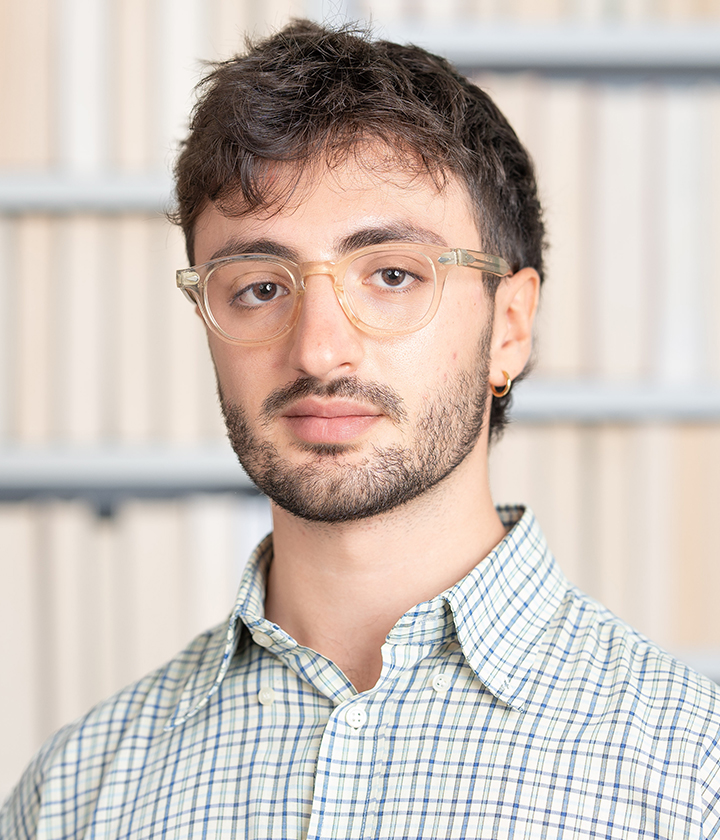
Congratulations to Giorgio Alagna on being selected as the Student Spotlight Award winner for March 2026!
The purpose of this award is to highlight students who are doing important work in the CBS community whether for research, clinical, and/or volunteer-humanitarian efforts.
This is a way to highlight their achievements, let the ACBS community know important work students are doing, and possibly provide a platform for mentoring/collaboration/professional development/conversations around highlighted areas.
Learn more about Giorgio:
Background of CBS Research/Clinical/Volunteering efforts/achievements:
My engagement with CBS began during clinical training at University Hospital Cologne's child and adolescent psychiatry unit, where I discovered ACT's transdiagnostic potential for young people facing existential challenges. This experience catalyzed my doctoral research developing a standardized, group-based ACT aftercare intervention for adolescent cancer survivors, addressing a critical gap where only 5.9% of German survivors receive psychotherapeutic aftercare.
I completed comprehensive ACT training through INeKO (University of Cologne) and the German Association for Behavioral Therapy (DGVT), specializing in child and adolescent applications. Currently, I coordinate an ACT-based parent group at the University of Cologne's Child and Adolescent Outpatient Clinic while conducting my PhD research as a Research Associate in the Department of Psychology and Psychotherapy in Special Education and Rehabilitation. My dissertation employs a three-paper cumulative design examining ACT in pediatric psycho-oncology through systematic review, in-clinic intervention development, and online delivery for rural populations.
My theoretical interests center on functional contextualism's application to meaning-making processes. Both my bachelor's and master's theses explored Buddhist non-self concepts through empirical psychology, investigating parallels with ACT's "self-as-context" process. I'm eager to deepen my understanding of RFT to inform more theoretically grounded intervention research.
Autobiography:
I was born in Palermo, Sicily, where my family fostered critical thinking and intellectual freedom from an early age. This foundation shaped my academic path through classical studies (Greek, Latin, and German language and literature), where I graduated with honors.
Recognizing limited career opportunities in Sicily, I moved to Cologne to study psychology. My bachelor's thesis explored Buddhist concepts of non-self, foreshadowing my later interest in functional contextualism. During my master's in Clinical Psychology and Psychotherapy, I completed practical training at University Hospital Cologne's child and adolescent psychiatry unit, discovering my passion for working with young people facing difficult life transitions.
The professional uncertainty surrounding Germany's new psychotherapy training pathway initially caused significant anxiety about my future. Alongside my third semester, I enrolled in ACT training to ensure I could continue working after my licensing exam. This decision proved transformative, deepening my commitment to contextual behavioral science.
Currently, I coordinate an ACT-based parent group at the University of Cologne's Child and Adolescent Outpatient Clinic while conducting autism diagnostics. My clinical interests center on pediatric psycho-oncology, RFT and meaning-making during challenging developmental periods.
Beyond clinical work, I've maintained strong advocacy involvement. As student council president, I championed therapeutic diversity in clinical training. More recently, I established a free counseling service for Italian-speaking individuals in Germany, a community with limited access to psychological support in their native language. This initiative, featured on local news, reflects my commitment to accessible, culturally responsive care aligned with ACT's values of psychological flexibility and compassionate action.
Future goals:
I would love to deepen my knowledge in RFT and functional contextualism, so that this knowledge may transmigrate into more grounded intervention research.