ACBS World Conference 2027
ACBS World Conference 2027
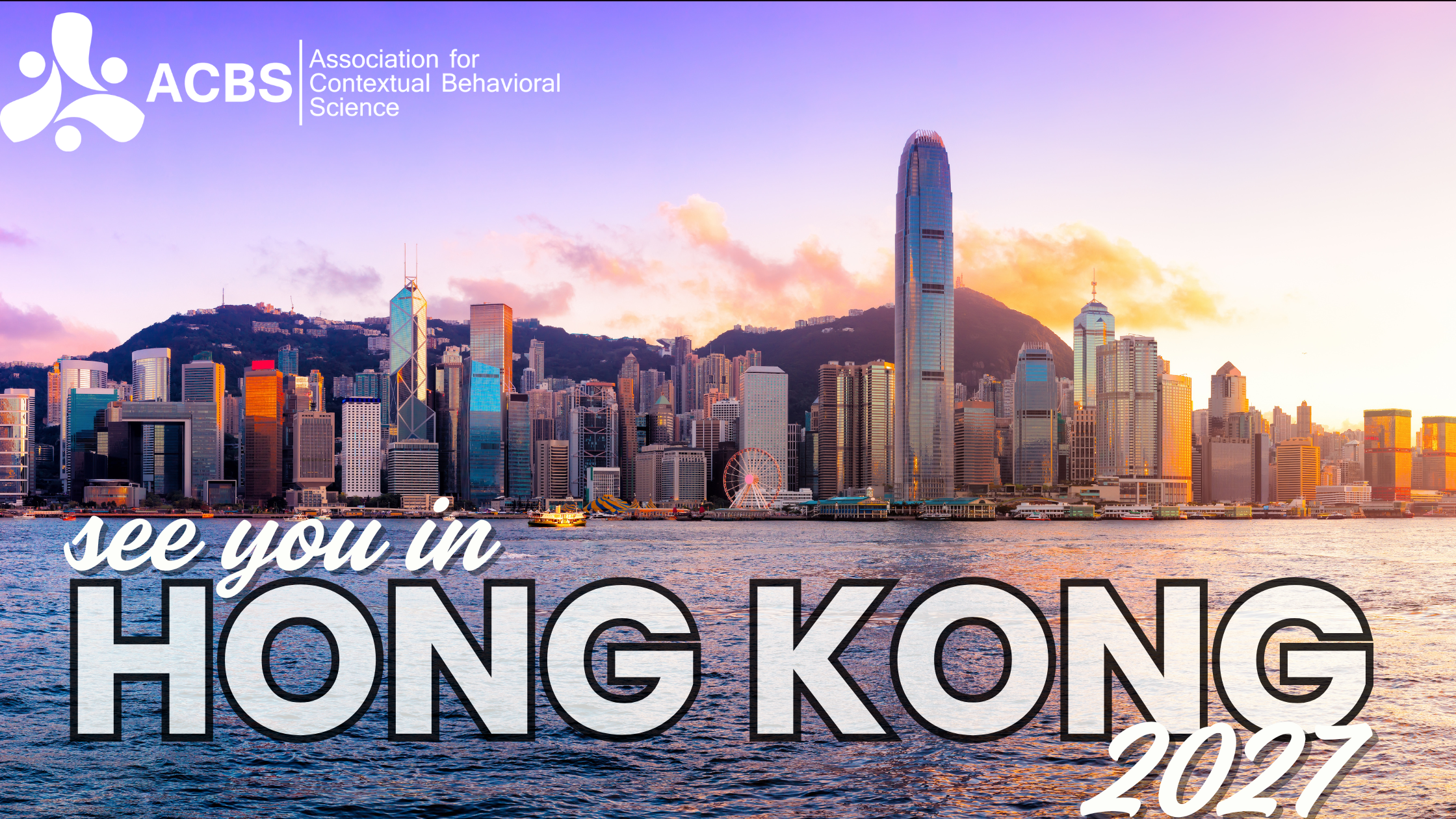
Planning is underway for the 2027 ACBS World Conference, and we’d love for you to be part of it. Register your interest to receive future email updates, including official dates, program highlights, and early registration details.
An unforgettable experience awaits in vibrant Hong Kong. We can’t wait to welcome you!
24-27 June 2027
(virtual pre-conference workshops 21-22 May; in-person pre-conference workshops 22-23 June)
Hong Kong Science Park (HKSTP)
Featured Speakers:
- Steven C. Hayes, Ph.D.; co-founder of Acceptance and Commitment Therapy (ACT) and Contextual Behavioral Science.
- Patricia Robinson, Ph.D.; pioneer in integrated care; co-founded the Primary Care Behavioral Health (PCBH) model and Focused Acceptance and Commitment Therapy (FACT).
- Dennis Tay; Hong Kong University of Science and Technology; recognized for his research in cognitive linguistics and the application of data analytics to study the role of metaphor in psychological counseling and mental healthcare discourse.
- Prof. Zhu Zhuohong; Chinese Academy of Sciences (CAS); pioneer in advancing ACT and Relational Frame Theory (RFT) within the Chinese cultural context
Conference Highlights
- Networking breaks
- Language translation
- Workshops, Workshops, Workshops. 1.5 hour and 3 hour workshops are included (no extra charge), with your in-person conference registration. These 50+ workshops are one-of-a-kind learning opportunities.
Program Co-chairs:
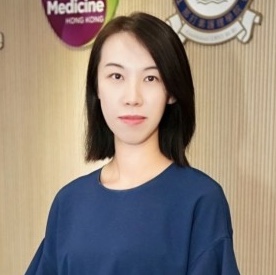 | 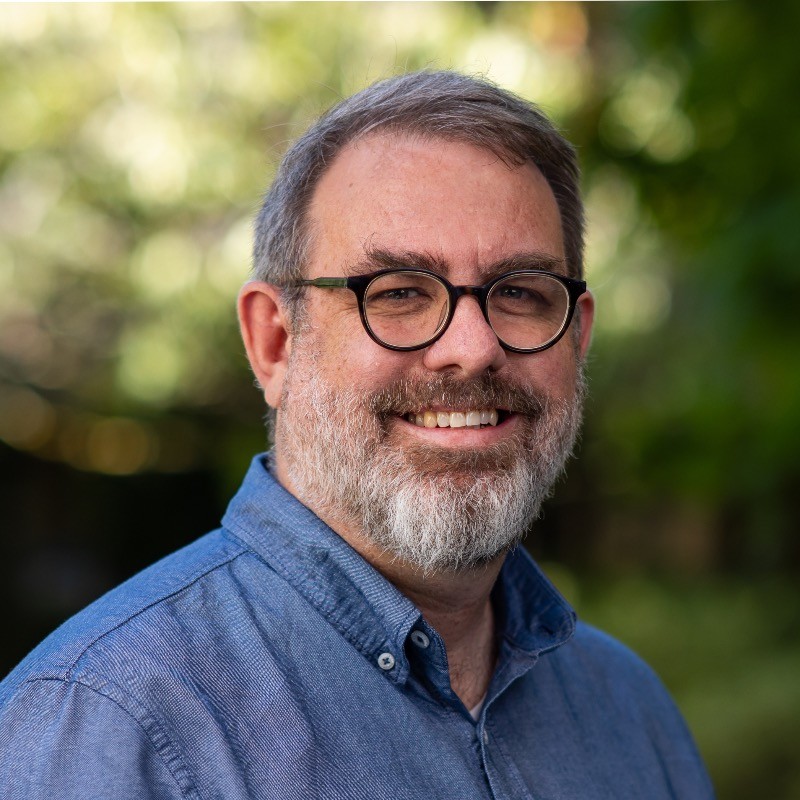 |
| Connie Chong The Chinese University of Hong Kong | Eric Morris La Trobe University |
Co-Organizer:
Supporting Organizations:
 |  |
Call for Submissions - Opening in November - Under Construction
Call for Submissions - Opening in November - Under Construction
Oral submission deadline: 15 February 2027
IGNITE - Panel - Symposium - Paper - Workshop - Plenary/Invited
Results of oral submissions will be emailed out in the last week of March or the first week of April 2027.
Poster submission deadline: 20 March 2027
Results of poster submissions will be emailed out in April.
Chapter/SIG meeting deadline: 1 April 2027
*Due to local technological capabilities, all presenters will need to be at the conference in Lyon and present in-person. No virtual presentation option will be available.
General Submission Tips and Information
Submission types:
IGNITE
The Ignite presentation is a short, structured talk in which presenters present on ideas and issues they are most passionate about using a “deck” of 20 slides that auto-advance every 15 seconds (no exceptions). Exactly 5 minutes total. Topics may be empirical, conceptual, philosophical, historical, or methodological. Presentation should be well-practiced and high energy (perhaps even... fun!).
In addition to any topic within CBS, we are specifically soliciting research-related submissions as these are a unique opportunity for oral presentation of research. We encourage researchers to consider this format for pilot data; what you would do differently if you could re-run your study; theoretical innovations (ideas that have not been yet tested but are either up and coming or something they want feedback on); program evaluations/ reflections on running CBS interventions with specific populations; conceptual innovations/ new models; "what if" presentations (what if research was conducted this way); methodology presentations on something very concrete (like sampling in CBS or recruitment best practices); qualitative research (focus groups, needs assessments) done with stakeholders receiving CBS services; and more!
Abstract word limit: 175 words maximum
For more on Ignite presentations, see:
http://www.speakerconfessions.com/2009/06/how-to-give-a-great-ignite-talk/
Panel Discussion
Panel discussions are 75-90 minute sessions and consist of 3 to 5 speakers selected for some shared interest or expertise in an area. Panelists respond to one or more questions or issues, with time allotted for interaction among the speakers and with the audience. A panel discussion is organized by a chairperson who serves as the session’s moderator. Abstract word limit: 175 words maximum
Symposia (chair, 3 - 5 papers and a discussant)
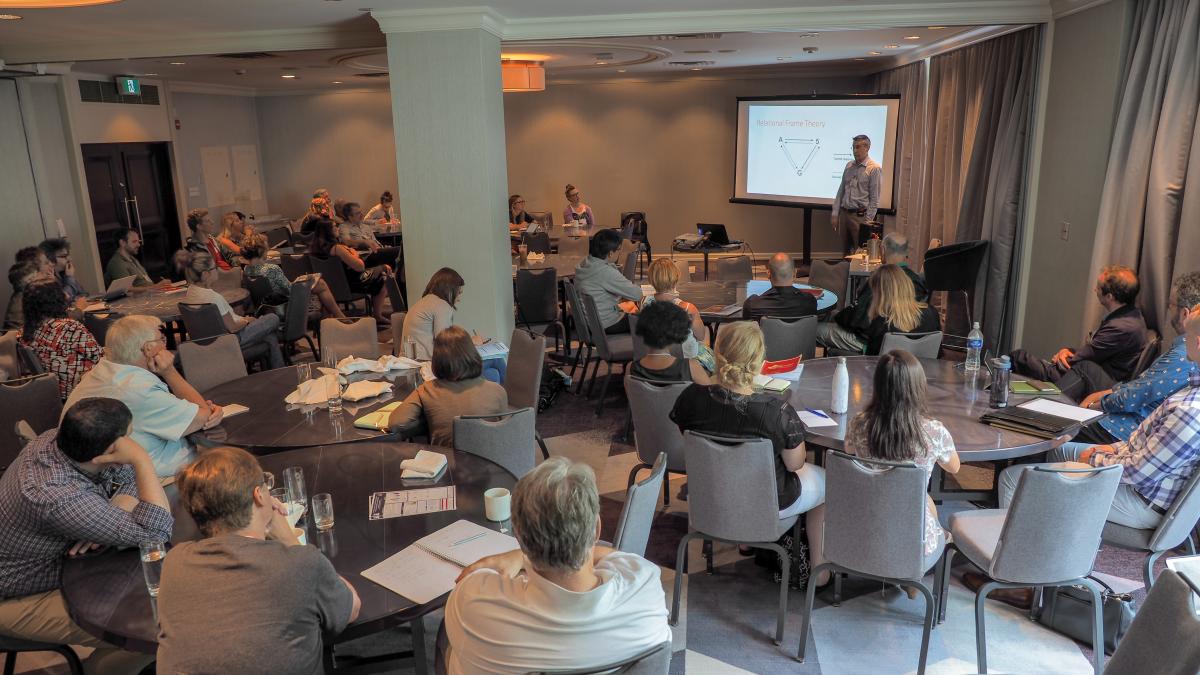
Organized by a chairperson who moderates the 75 or 90 minute session, symposia are a series of three to four 15-20 minute presentations focused on either empirical research or conceptual, philosophical, historical, or methodological issues. A discussant highlights and integrates the contributions of various speakers in the symposium and moderates questions from the audience. Chairpersons are encouraged to use symposia as an opportunity to integrate related work by: 1) bringing speakers of different affiliations together rather than showcasing the work of a single group and 2) incorporating different kinds of talks (e.g., historical, conceptual, and research-based) on the same topic into one symposium. Papers from submissions that are not accepted may be considered for a poster session. This year, we are prioritizing submissions that are research and data driven. In service of being more data aware, we encourage you to include research citations (data citations) with your proposal. The Program Committee will not split apart symposia that are submitted together. Abstract word limit: 175 words maximum
Symposium organizers: You may send this document to the presenter of each of the papers in your symposium to collect the needed information from them. The symposium organizer will then submit all of the information for the session to ACBS via the submission link below (prior to the February 15 deadline):
Paper (not part of a pre-arranged symposium)
Paper submissions are individual, oral presentations, usually concerned with conceptual, philosophical, historical, or methodological issues. A paper submission will usually report on data. All paper presentations will be 15-20 minutes long. Accepted submissions will be organized into paper sessions of 75 or 90 minutes. Submissions not accepted will be considered for a poster session. We are prioritizing submissions that are research and data driven. In service of being more data aware, we encourage you to include research citations (data citations) with your proposal. Abstract word limit: 175 words maximum
Workshop
Workshops are training sessions of 1.25/1.5 or 2.75 hours and usually focus on a combination of experiential and/or didactic exercises. Workshop submissions are highly competitive (note: based on past events, the acceptance rate for workshops is approximately 60-70%, and of workshops submitted only 20%-35% receive 2.75 hour slots). Please put your best workshop/abstract forward keeping this in mind when determining your desired length. Keep in mind as well that most workshops selected are for the 1.25/1.5 hour slots. Be sure to clearly state your goals and objectives for participant education in your submissions. Workshops should be regarded as opportunities to directly train specific skills rather than to present research findings, discuss conceptual, philosophical, or methodological issues, or share opinions. However, in service of being more data aware, we encourage you to include research and data citations supporting your topic with your proposal, and to briefly present these (1-2 slides) during your workshop. Submissions that are not clearly focused on training should be submitted for other formats. Abstract word limit: 175 words maximum
Poster
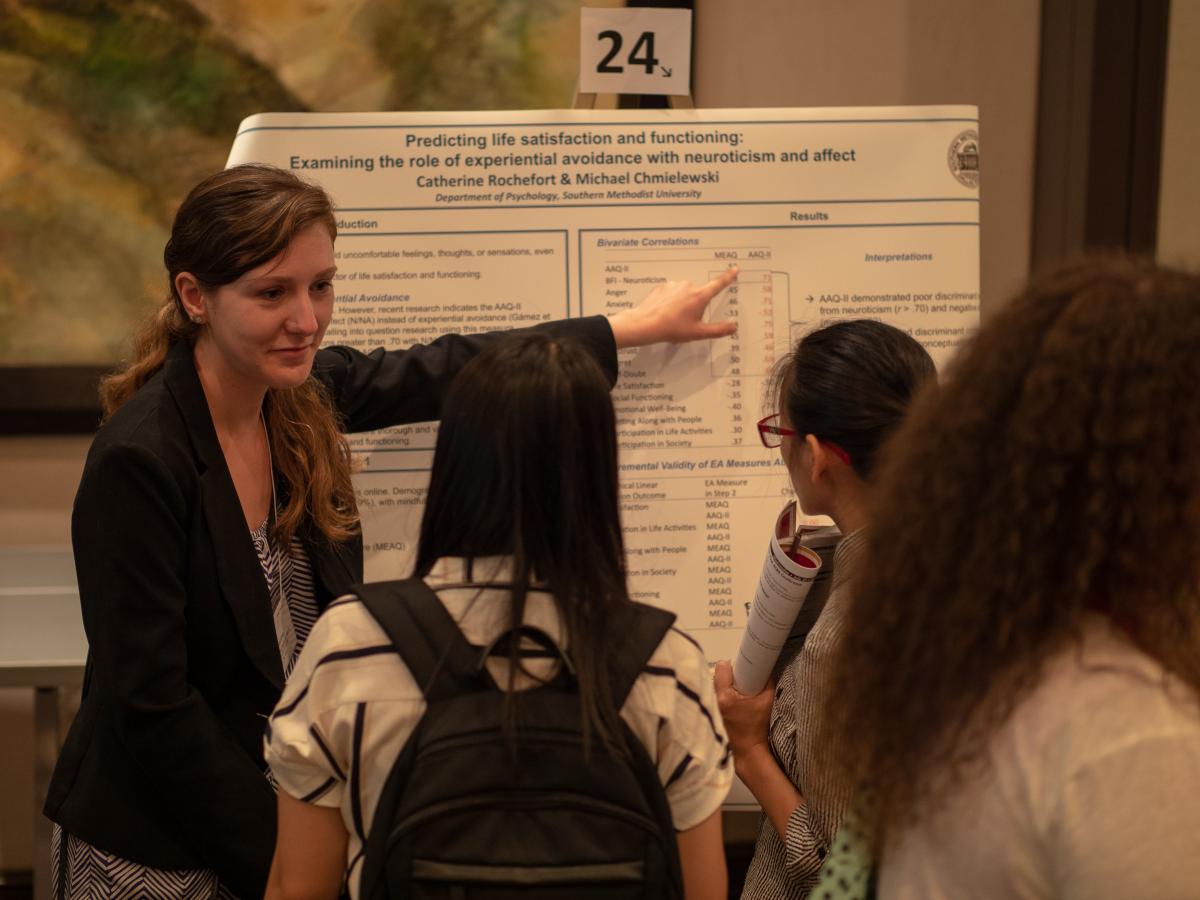
Posters usually report empirical research and will be organized into one or more sessions, during which attendees will be invited to review the research presented and discuss findings with poster presenters. Presenters must be at their poster during their assigned time of the poster session and may choose to provide handouts. (Poster size: no larger than 36 inches tall by 48 inches wide, or A0 size. Smaller is also permitted). Abstract word limit: 175 words maximum
Plenary/ Invited Address (use only if instructed)
Chapter/SIG/Committee Meeting
This gives Chapters/SIGs (or forming chapters and sigs) the opportunity to reserve a space and time to get together to network with others who share the same area of interest or geographic setting. This form allows SIGs and Chapters to request a time in the program for this purpose. Deadline: 1 May 2027
Tips for Submissions
- Are you wondering how to increase the chance of acceptance for your submission? Click here for tips.
- Unsure about writing Educational Objectives? Click here to learn more about them.
- Are you submitting a poster? Check out the poster guidelines here.
Conference Awards & Scholarships
Conference Awards & Scholarships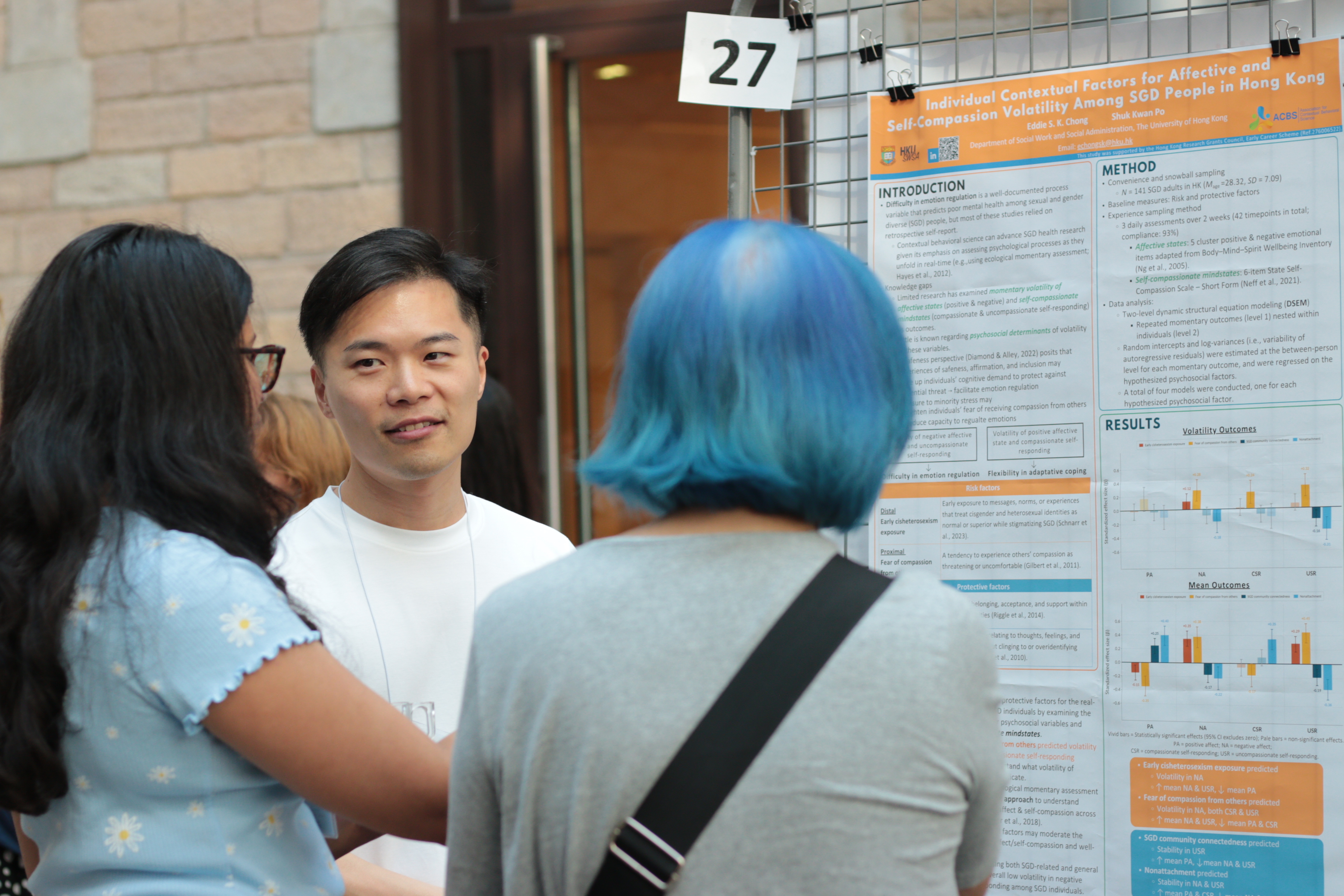 ACBS Junior Investigator Poster Award:
The purpose of this award is to recognize and help develop junior investigators conducting research in contextual behavioral science and who are presenting the results of this research at the Association's annual meeting.
ACBS Student Spotlight Program: (Accepted November 1-November 30)
The Student Spotlight Program highlights students who are doing important work in the CBS community whether for research, clinical, and/or volunteer-humanitarian efforts. It is a way to highlight their achievements, let the ACBS community know important work students are doing, and provides a platform for mentoring/collaboration/professional development/conversations around highlighted areas.
Developing Nations World Conference Scholars: (Application closes February 1)
ACBS is an international society but in many corners of the world it is difficult for professionals to attend ACBS conferences and trainings due simply to cost. The Developing Nations Fund helps disseminate CBS in the developing world and provides scholarships for attendees and presenters from developing nations to attend the world conference.
Diversity, Equity, and Inclusion World Conference Scholars: (Application closes February 1)
The Diversity, Equity, and Inclusion Committee is aiming to bring increased diversity to our annual conferences by providing funds for individuals who come from diverse backgrounds and who would not be able to attend an ACBS conference without this added financial support. Both trainees and professionals are eligible for this competitive award.
Early Career Research Paper Award: (Accepted papers will be emailed regarding eligibility)
The Award recognizes an outstanding empirical research abstract from an early career researcher, with the goal of stimulating that person’s long term participation in the ACBS conference as an outlet for presenting empirical science within the broad domain of CBS.
Michael J. Asher Student Dissertation Award: (Application closes February 1)
This award is given to students based on their doctoral dissertation proposal related to the use of Contextual Behavioral Science with children/adolescents. Michael J. Asher, Ph.D., ABPP passed away in 2016 and was a clinical psychologist at Behavior Therapy Associates, P.A. since 1988. He was passionate about his work, loved psychology, cognitive behavior therapy, and especially enjoyed learning about and practicing Acceptance and Commitment Therapy (ACT).
ACBS Foundation Student Scholarship: (Application closes February 15)
The goal of the ACBS Foundation is to support existing activities within ACBS and explore areas for future development. The ACBS Foundation Student Scholarship that will cover the full student registration fee for attending the annual ACBS World Conference.
Student World Conference Scholars: (Application closes February 15)
The mission of the ACBS Student Special Interest Group is to work to support students of contextual behavioral science by advocating for their professional and personal development and facilitating their contribution to ACBS and the larger community. One step in moving towards this mission has been to create a Student World Conference Scholarship that will help subsidize the costs of attending the annual ACBS World Conference.
Continuing Education (CE) Credits
Continuing Education (CE) CreditsType of credit available:
CE credit for psychologists
The Association for Contextual Behavioral Science is approved by the American Psychological Association to sponsor continuing education for psychologists. The Association for Contextual Behavioral Science maintains responsibility for this program and its content.
- ACBS will be applying for CEs for BCBAs
Certificate with Number of Hours Attended
As an alternative to a CE certificate, some credentialing agencies (please check with yours) may accept a certificate with the number of hours attended. This requires that an individual verifies their attendance by signing in and out of each session that they attend during the event. The cost for this type of certificate will be approximately $25 USD.
Not sure if you need CEs?
Check with your licensing agency, and/or sign in/out on the yellow sheets provided, and you can determine your eligibility immediately after the event (still adhering to the evaluation deadlines mentioned above). If you do not scan or sign in/out, or complete necessary evaluations by the deadline, that cannot be “corrected” later.
Information about the CE Process:
- CEs or certificates with the number of hours attended are available for a one-time fee for the entire event.
- CE rules require that we only issue credits to those who attend the entire session. Those arriving more than 15 minutes late or leaving before the entire session is completed will not receive CE credits.
- Evaluations will be available, but are not required to earn CE credits.
- Please remember to scan in and out at the beginning and end of each session using our scanner system. If there is a problem and the scanners are not working, please make sure to sign in and out on the yellow attendance sheet provided. We cannot give CE credit if you do not scan/sign in and out.
- Please DO NOT SCAN in and out for coffee/tea breaks.
- *CE credits are NOT available for the following sessions:
- IGNITE sessions
- Poster sessions
- Chapter/SIG/Committee meetings, or other lunch time sessions
- Note: CE credits are only available for those registered as a professional. You may not earn CE credits with a student registration.
Fees:
An approximately $75 USD fee will be required to earn CEs. If you attend either a pre-conference workshop(s), World Conference, or both, only one fee is due. If you register for multiple events separately, please only pay the fee one time. This fee is non-refundable (unless you cancel your registration in its entirety before the cancellation deadline). Attendance verification (sign in/out) and evaluations also may be required.
The cost for a certificate indicating only the number of contact hours (not a CE certificate) is approximately $25 USD.
Refunds & Grievance Policies:
Participants may direct any questions or complaints to ACBS Executive Director Emily Rodrigues, [email protected], or through the Contact Us link on this website.
*If you would like a different CE type in a future year from what is listed above, please contact ACBS staff via the "contact us" link on the website to provide feedback. The ACBS Conference Strategy Committee determines the final CEs offered each year based on need and relevance to the anticipated conference attendees in each location. In addition to the time and cost it takes to submit a CE application, a long lead time is sometimes needed to collect the required information. (Some reporting requirements are so unique that they must be built into the presenter submission forms in October, the year prior to the conference.)
Hotel & Travel
Hotel & Travel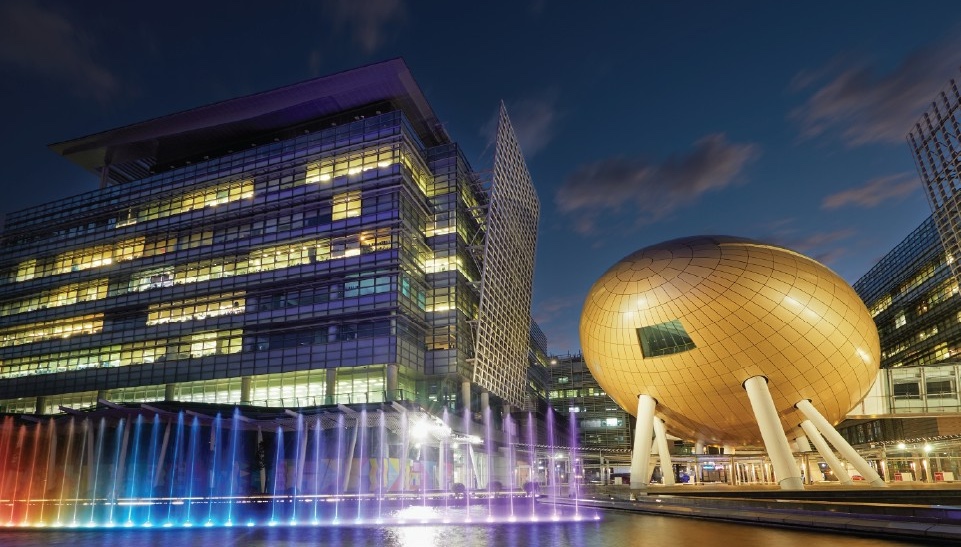
Plan Your Stay in Hong Kong!
Get ready to experience vibrant Hong Kong, a city of modern innovation, world-class food, and stunning natural landscapes!
The 2027 ACBS World Conference will be held 24 - 27 June at Hong Kong Science Park, located in the New Territories along the beautiful Tolo Harbour.
Hong Kong Science Park
Science Park Rd, Ma Liu Shui, New Territories, Hong Kong
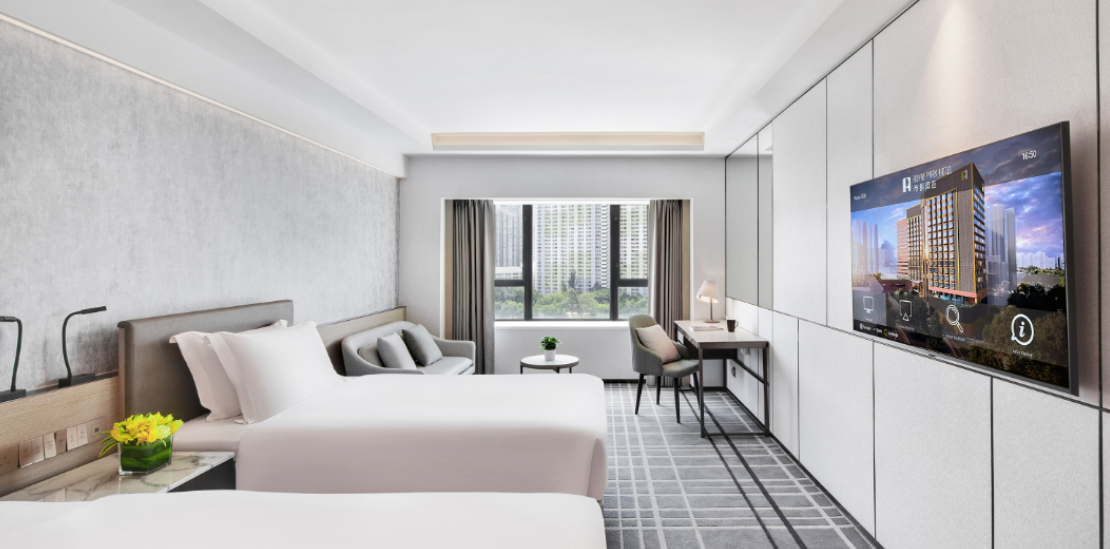
Hotels: We’ve partnered with the Royal Park Hotel to make your stay convenient and comfortable. This property is offering a special ACBS attendee rate. Rooms may be limited, so we recommend booking early.
Hotel Information & Reservations
Transit: Hong Kong has an extensive public transportation network, making it easy to get around by MTR (Mass Transit Railway), bus, minibus, taxi, and more. Find information about getting around the city and to Hong Kong Science Park from the airport, MTR stations, nearby hotels, and other locations here:
Hotel Information and Reservations - Hong Kong
Hotel Information and Reservations - Hong Kong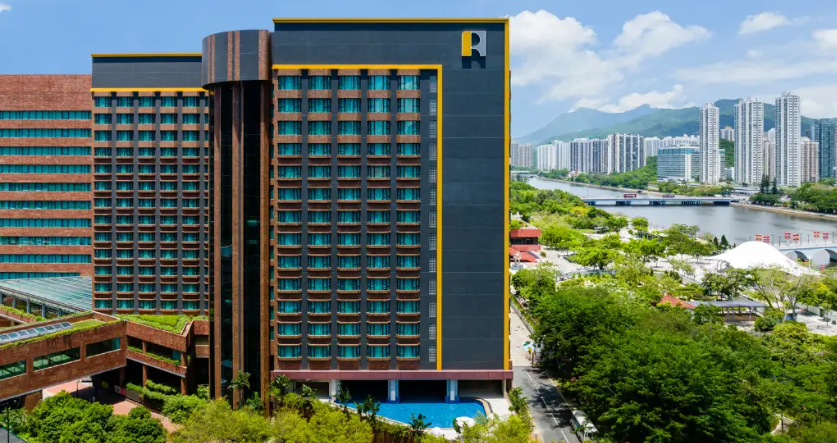
Royal Park Hotel
Royal Park Hotel
8 Pak Hok Ting Street
Sha Tin, New Territories, Hong Kong
Royal Park Hotel is located next to Sha Tin MTR (Metro) Station, just 15 minutes by car or shuttle bus to the conference venue.
- HK1,250 per night including 1 buffet breakfast (approx. $160USD)
- HK1,350 per night including 2 buffet breakfasts (approx. $172USD)
- Booking and Cancellation Details
For participants to book through official website booking link, credit card payment for whole period is required for reservations.
For amendments and cancellations made on or before March 18, 2027: 100% of the prepayment will be refunded to the credit card used for the original transaction.
For amendments and cancellations made on or before April 30, 2027: 50% of the prepayment will be refunded to the credit card used for the original transaction.
For amendments and cancellations made on or after May 19, 2027: No amendments or cancellations will be permitted. All prepayments will be non-refundable and nontransferable.
- Airport Transfer to Royal Park Hotel
Airport Bus A46 provides direct service between Hong Kong International Airport and the Royal Park Hotel area. Estimated travel time: Approximately 40-45 minutes
- At Hong Kong International Airport, follow the signs for the public bus / Airport Ground Transportation Centre.
- Take bus A46 toward Sha Tin / Tai Wai.
- Get off at the stop serving Royal Park Hotel / Sha Tin.
- Follow the signs and walk approximately 5 minutes to the hotel.
More information available on the Royal Park Hotel website: https://www.royalpark.com.hk/location-and-transportation/
- Transit from Royal Park Hotel -> Hong Kong Science Park
Estimated travel time: Approximately 15-25 minutes.
- Walk from Royal Park Hotel to Sha Tin MTR Station.
- From Sha Tin Station, go to Pai Tau Street and take green minibus 27 toward Hong Kong Science Park.
- Get off at the Science Park stop.
More information available on the Hong Kong Science Park website: https://www.hkstp.org/en/visit/transportation
Public Transit & Airport Transfer Information
Public Transit & Airport Transfer InformationHong Kong features many accessible public transit options, including taxi, ferry, bus or the MTR (Mass Transit Railway.)
Public Transportation - HKeMobility app
The Hong Kong Tourism Board recommends using HKeMobility to plan your route. By providing information such as transport routes, fares, journey time, arrival time and real-time traffic conditions about MTR, buses, mini-buses, trams, ferries and water taxis, it enables you to find the best point-to-point transportation using public transport. Find more information here: https://www.hkemobility.gov.hk/
Apple Store Download Google Play Download Huawei Download
Octopus Card & Public Transportation Payment
The Octopus Card is a rechargeable payment card widely used for public transportation in Hong Kong. It can be used on the MTR, buses, and other participating transportation services, as well as at many shops, grocery stores, some restaurants, and businesses.
Visitors can purchase an Octopus Card at Hong Kong International Airport and other locations throughout Hong Kong. You can also add an electronic version of the Octopus Card to your mobile device. The digital version is highly recommended as it requires no card fee, and any overfunding can be easily refunded back to you. Please find more information on the Octopus Card tourist page: https://www.octopus.com.hk/en/consumer/tourist/choices/index.html
Apple Store Download Google Play Download Huawei Download
Other contactless payment options are also available on many Hong Kong transportation services. Check the MTR website for current information about accepted payment methods.
- Airport Transfer to Hong Kong Science Park (HKSTP)
Below are several options for getting to the conference venue (HKSTP) from the Hong Kong International Airport. If you are looking for airport transfer information to the recommended conference hotel instead, please visit the hotel information page.
Option 1: MTR + Bus
Estimated travel time: Approximately 60-75 minutes
Current fare: Approximately HK$135-170 per person- At Hong Kong International Airport, follow the signs for the Airport Express (The Airport Express is a high-speed rail service run by the MTR that connects Hong Kong International Airport with the center of the city.)
- Take the Airport Express from Airport Station to Kowloon Station.
- From Kowloon Station, transfer to the MTR and travel toward University Station on the East Rail Line.
- At University Station, take bus 272K to Hong Kong Science Park.
For current Airport Express and MTR information, visit the MTR website: https://www.mtr.com.hk/en/customer/main/index.html
Option 2: Taxi / Uber
Estimated travel time: Approximately 35-45 minutes
Estimated cost: Approximately HK$350-420Taxis are available at Hong Kong International Airport. Follow the airport signs to the official taxi stand. Alternatively, Uber also operates in Hong Kong and can be ordered via the Uber app.
Note: Taxis are colored via the district they service. The green taxis will service New Territories, where Hong Kong Science Park is located.
Tell the driver that you are going to: Hong Kong Science Park, Pak Shek Kok, New Territories
Hong Kong taxis are metered, so the final fare will depend on traffic, route, tolls, and other applicable charges. Uber prices vary throughout the day depending on demand and availability. The estimated cost above is provided as a guide only.
For more information about taxis and getting around Hong Kong, visit the Hong Kong Tourism Board.
- Getting to Hong Kong Science Park from Elsewhere
Hong Kong Science Park is located in Pak Shek Kok, in the New Territories. The park is easily accessible by public transportation or taxi/uber.
Option 1: By MTR + Bus or Minibus
The closest MTR stations are University Station and Sha Tin Station, both on the East Rail Line.
- From University MTR Station:
Take bus 272K from the University Station Bus Terminus directly to Hong Kong Science Park. - From Sha Tin MTR Station:
Take green minibus 27 from Pai Tau Street directly to Hong Kong Science Park.- (If you are staying at the recommended conference hotel, Royal Park Hotel, this is a particularly convenient option.)
Option 2: By Bus
Hong Kong Science Park is served by a number of public bus routes connecting the park with different areas of Hong Kong, including Tsim Sha Tsui, Diamond Hill, Kwun Tong, Tai Po, Tsuen Wan, Sha Tin, and other locations.
Routes serving Science Park include 263A, 271B, 272A, 272K, 272P, 272S, 272X, 274P, 907D, 43P, 43S, 582, 74D, 74P, 82C, and 96. For current routes, schedules, fares, and estimated arrival times, use the Hong Kong Transport Department's HKeMobility journey-planning service (linked above.)
Option 3: Taxi / Uber
Taxis are widely available in Hong Kong. Uber also operates in Hong Kong and can be ordered via the Uber app.
Note: Taxis are colored via the district they service. The green taxis will service New Territories, where Hong Kong Science Park is located.
- Red: Hong Kong Island and Kowloon
- Green: New Territories
- Blue: Lantau Island
Tell the driver that you are going to: Hong Kong Science Park, Pak Shek Kok, New Territories
Hong Kong taxis are metered, so the final fare will depend on traffic, route, tolls, and other applicable charges. Uber prices vary throughout the day depending on demand and availability.
For more information about taxis and getting around Hong Kong, visit the Hong Kong Tourism Board.
- From University MTR Station:
- Parking at Hong Kong Science Park
Attendees arriving by personal vehicle can access Hong Kong Science Park via Tolo Highway.
Current parking rates for Hong Kong Science Park include:
- Private cars & Motorcycles: HK$20 per hour
- Day parking (08:00–18:59): HK$120 per period in designated car parks
- Night parking (19:00–07:59): HK$60 per period in designated car parks
Parking rates and designated parking areas may change, so please check the Hong Kong Science Park website for the most current information before traveling.
- Important: Octopus Card Required for Parking at Hong Kong Science Park!
Hong Kong Science Park currently requires an Octopus Card for hourly parking payments. HKSTP's current car park policy states that hourly parking is Octopus Card only. If you plan to drive to the conference, we recommend obtaining an Octopus Card before arriving at Hong Kong Science Park (information above.)
Program Committee
Program CommitteeWorld Conference 2027 Program Co-Chairs
Dr Connie Chong is an Associate Professor at The Nethersole School of Nursing, Faculty of Medicine, The Chinese University of Hong Kong, and a registered nurse with substantial clinical experience in medicine and paediatrics. Her research centres on Contextual Behavioural Science, with a particular focus on the application and evaluation of Acceptance and Commitment Therapy (ACT) for family caregivers of children with specialised needs or chronic conditions. She serves as Editor of the Journal of Clinical Nursing and Associate Editor of the British Journal of Health Psychology and the Journal of Contextual Behavioral Science. Since her PhD journey, Dr Chong has maintained a close and meaningful connection with the ACBS community through her research leadership and professional service. She was the inaugural recipient of the ACBS Early Career Paper Award in 2018, serves as a Strategic Scientific Council Member of ACBS, and is a former Chair of the ACBS Awards Committee. Recognised as one of the leading CBS and ACT scholars in Asia, Dr Chong brings a distinctive nursing perspective to the CBS field. She also founded ACTuWISE Limited, the first nurse-led technology start-up in Hong Kong integrating ACT and artificial intelligence to advance mental health services, training and impactful research.
Dr Eric Morris is an Associate Professor at La Trobe University and Consultant Clinical Psychologist at Northern Health, Melbourne, Australia. As co-director of ACTUALISE Lab at La Trobe University, Eric researches Acceptance and Commitment Therapy for recovery from psychosis, insomnia, and for workplace resilience training. Eric is on the Editorial Board of the Journal of Contextual Behavioral Science, the British Journal of Clinical Psychology and Cognitive Behaviour Therapist. Eric is a former Chair of the BABCP ACT Special Interest Group (UK) and President of the Australia & New Zealand Chapter of the Association of Contextual Behavioural Science. He is a Fellow of the Association for Contextual Behavioural Science. He is a co-editor of Acceptance and Commitment Therapy and Mindfulness for Psychosis and Psychological Interventions for Psychosis: Towards a Paradigm Shift and co-author of the group treatment manual, ACT for Psychosis Recovery. Eric is a co-author of the self-help guide, ACTivate Your Life: An Acceptance and Commitment Therapy Workbook for Building a Life that is Rich, Fulfilling and Fun.
Sponsorship Opportunities
Sponsorship Opportunities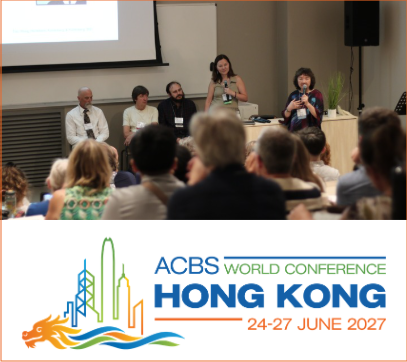 Gain visibility and access to a highly engaged audience of professionals and thought leaders in contextual behavioral science. Your sponsorship helps advance ACBS’s mission while positioning your brand at the forefront of innovation and professional excellence.
- Showcase your products and services to an engaged global network of 50,000+ decision-makers and practitioners in the field.
- Build brand recognition through conference materials, signage, and digital platforms.
- Align your organization with ACBS’s commitment to advancing science and practice.
- Position your organization as a leader of innovation and professional excellence.
In addition to on site engagement opportunities, sponsors gain access to our global network of industry influencers and tastemakers.
- Fast growing social media community of 42,000+ active followers and counting!
- 13,000 members in email distribution list
- Your logo shared digitally through email and social media each day of the conference.
- Even more reach! Social media posts during the 2026 World Conference garnered more than 478,000 impressions.
- Conference microsite landing page received nearly 44,00 visits in 2026.
WC2027 Languages/ Interpretation
WC2027 Languages/ Interpretation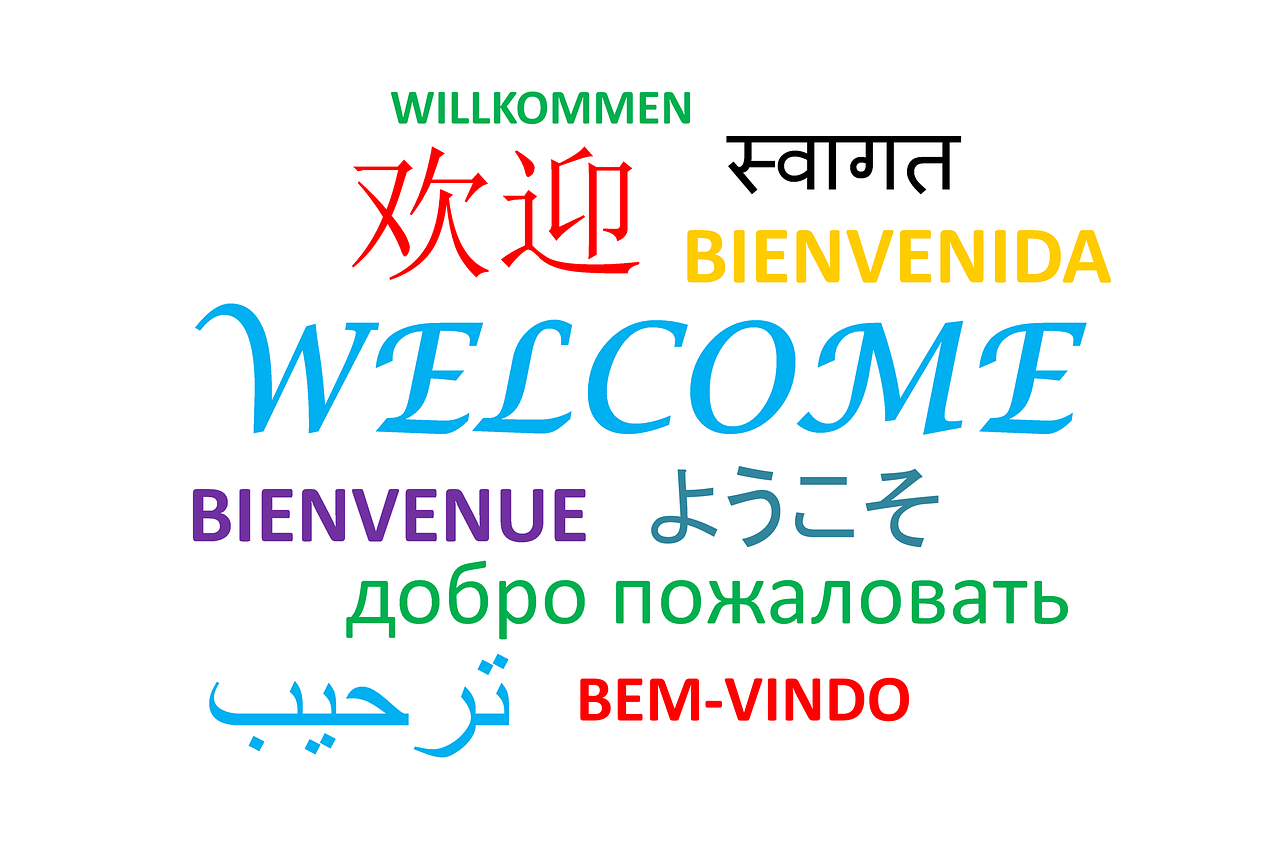
Nearly half of the World Conference sessions and all in-person Pre-Conference workshops accessible in 50+ languages.
22-23 June 2027, all Pre-Conference, Intensive workshops will be presented in English and available in 50+ languages via simultaneous AI (artificial intelligence) translation software. (Use of this browser-based translation system requires attendees to have a smart phone, and wired or wireless headphones, that can connect to Wi-Fi.)
24-27 June 2027, the ACBS World Conference will have 6 presentation rooms (including the large plenary session room) available in 50+ languages via simultaneous AI (artificial intelligence) translation software. (Use of this browser-based translation system requires attendees to have a smart phone, and wired or wireless headphones, that can connect to Wi-Fi.)
The AI translation service provided at the conference is the only approved AI-software for this event, all other AI notetaking tools are prohibited without prior approval by ACBS. Please see our policy regarding the use of other AI tools at the 2027 World Conference here.