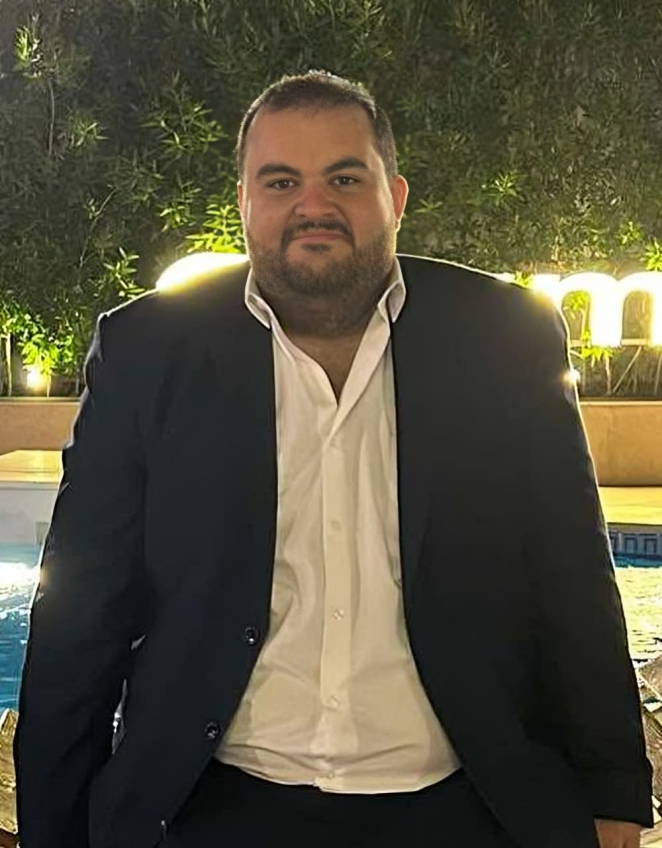
Mohamed Elemam
Could you please tell us a little about you and your background?
I am a recent graduate from a basic and applied psychology undergraduate program. I currently hold several roles as a learning and development specialist, university teaching assistant, and a research lab coordinator. Across these roles, my work has been driven by functional contextual frameworks, including work on ACT, personality, cognition, emotions, and process-based therapy.
How did you become interested in CBS?
My interest in CBS grew from a period where I was frustrated by the detachment of diagnostic systems, assessments, and associated research and capital-T-truth claims from the practical, lived experiences of individuals (myself included) and what actually facilitates meaningful change. Something felt amiss. Around that time, I was introduced to functional contextualism, ACT, RFT, and PBT, which, to me, seemed to bring coherence and bridge the gap between rigorous research and meaningful evidence-based practice.
Could you tell us about your research and application interests?
My L&D work has been focused on designing accessible learning experiences in Arabic for individuals, clinicians, and organizations that is grounded in functional contextual philosophy and evidence-based psychology practices. An example of this is a training program where we integrated the Big Five personality factors within a contextual framework as a vehicle for fostering openness and self-understanding, which served as a foundation for later values-based work and action planning.
On the other hand, my research focuses on idionomics and the feasibility of idiographic methods within the Egyptian context. My interests mainly lie at the intersection of clinical psychology and cognition; specifically, my thesis involved an idiographic examination of how mobile cognitive training influences attentional, affective, and overt behavior processes among individuals experiencing ADHD symptoms.
Could you tell us about your experience at the World Conference this year?
I attended the workshop titled "Focused Acceptance and Commitment Therapy: Increasing the Reach of Contextual Behavioral Science to Novel Settings and New Populations." The sessions continuously bridged theory and practice, addressing the application of ACT core processes within brief intervention models, the rising necessity for such approaches in modern healthcare, and recent developments in the FACT approach.
Throughout the workshop, the potential of FACT in reaching wider, and even underserved, populations and more diverse contexts became increasingly evident. Additionally, it was particularly eye-opening to learn brief tools to shift processes that I had perceived as typically requiring long-term interventions to change. Overall, the sessions provided clarity on the nuances of specific concepts, views, and practices related to the ACT processes, including experiential avoidance, acceptance, and committed action.
Was there anything that stood out to you about the CBS community?
What stood out the most to me was the wide range of backgrounds and professional interests within the community. While every person worked in different context and in different specializations, there was a profound sense of unity. Despite these different professional contexts, everyone was equally welcoming and friendly. It was inspiring to be among such a diverse group of people, each of whom had their own meaningful reason to be there and grow.
What did you take back from your experience that has been helpful to you?
It was mainly the approach to integrating ACT briefly and flexibly in different contexts. There have been several cases where while designing a workshop or planning a lecture, we aim to incorporate values work or acceptance strategies without detracting from the primary focus topic, and FACT has been invaluable for this. Since the conference, I have been using approach and skills I learned to find avenues for meaningful conversations and change, even in brief interactions.