Conference FAQ
Conference FAQ
General Questions about the ACBS World Conference
- I registered for the conference, now what?
Share the Excitement!
Let your network know you’re attending #ACBSWC26! Share the news on social media using our handy toolkit to help spread the word about ACBS and grow our community: https://contextualscience.org/social_media_toolkit
- How much do workshops cost during the World Conference?
Workshops given during the World Conference are free of charge.
(Note: Pre-Conference Intensive workshops have a separate fee and registration.)
- What are The Follies?
The Follies is a unique feature of ACBS conferences. Basically, it’s a cabaret show, filled with funny songs, sketches, stand-up comedy routines, humorous PowerPoint presentations, pre-made videos, etc. And of all of this funny and talented content is created by the conference delegates! Get your creative powers focused, anything you have seen in the ACT world that deserves to be made fun of is fair game!
All registered conference attendees are welcome, don't forget to bring your name badge!
- What are educational objectives?
Educational Objectives are required for sessions to be eligible for Continuing Education (CE) credit.
Writing Educational Objectives (according to the APA):
- Educational objectives, or learning outcomes, are statements that clearly describe what the learner will know or be able to do as a result of having attended an educational program or activity.
- Educational objectives must be observable and measurable.
- Educational objectives should (1) focus on the learner, and (2) contain action verbs that describe measurable behaviors
- Verbs to consider when writing Educational objectives:
- list, describe, recite, write
- compute, discuss, explain, predict
- apply, demonstrate, prepare, use
- analyze, design, select, utilize
- compile, create, plan, revise, summarize
- assess, compare, contrast, rate, critique
- Verbs to avoid when writing Educational objectives
- know, understand, learn, become aware of, become familiar with, have a working knowledge of
- be able to use, help clients respond to, approach, tweak
- expand, grow, increase, improve
- explore, express, appreciate, think critically
Examples of well-written Educational objectives:
- Implement traditional exposure-based interventions as adapted for an acceptance-based model.
- Describe the role and significance of avoidance in the development and maintenance of psychopathology.
- Conduct a full-scale values assessment with clients.
Examples of poor Educational Objectives:
- Hear the latest research about ACT. (not learner-focused; not about measurable behaviors)
- See a role-play. (not learner-focused; not about measurable behaviors)
- What does a chairperson do?
The Chairperson for a PANEL should prepare to briefly introduce each Panelist. Keep it brief and relevant, so as not to take up lots of precious session time. Introduce all Panelists at the beginning of the session. Panels vary in their format, some have each panelist give 10 minute presentations followed by a discussion/debate by the panelists, some require the Chair to pose pre-arranged questions, some feed solely off of audience questions. The Chair is responsible for knowing or establishing the format and facilitating it (perhaps by asking the questions or calling on the audience members). If the panel gets off track (or off topic) it's the Chair's responsibility to bring them back to the topic, and make sure that the Educational Objectives listed in the Program are met/covered. Please keep in mind though that the Chair is not a Panelist (unless they are scheduled in both roles) and should make sure not to speak at length. If the Q&A is still going strong at the end of the scheduled time period, please thank the presenters, and announce that if the audience has any more questions, the presenters may be able to give them a few minutes in the hallway for remaining questions. This is necessary if another session is starting in 15 minutes (so that the next presenters can begin to prepare in the room) and so that those audience members that need to leave can do so (without disrupting the session) at the conclusion of the time period. It is the responsibility of the Chairperson to make sure that the session begins on time. Please make sure you have a watch.
Here's another cool article about Panel chairing for some other tips.
The Chairperson for a SYMPOSIUM should prepare to briefly introduce each speaker, immediately prior to his/her presentation (this can be as minimal as Name, Affiliation, Paper title; or a little more substantive if desired, but still brief.) It is also your responsibility to monitor the timing of each speaker. (Each session may have slightly different timing... if the session is 60 minutes, with 3 papers, each paper would be 10 minutes, then 15 minutes of time for the Discussant, followed by Q&A. If the session is 60 minutes with 4 papers, each paper would get 10 minutes, 10 minutes for the Discussant, and the remainder for questions.) If there is no Discussant, each presenter may have more time, or you can opt for a longer Q&A period.
Briefly tell each speaker, prior to the session something like "I'll keep the time on my watch. Each speaker has 10 minutes. I'll raise my hand in the back of the room when you have 5 minutes, and I'll raise my hand and hold up 1 finger when you have 1 minute left." You may put notecards on the lectern with the amount of time left, if you prefer. (The set up of the room may or may not permit this.) If the presenter does not stop at the end of their time, please kindly interrupt them (verbally), and ask them to wrap up so that the next presenter may begin. (The audience will thank you!) The Question & Answer period for all papers should occur at the end of the session (not after each presentation). Please just make sure that everyone gets a fair and equal amount of time. (If the first person has a short talk, the extra time may be divided among the remaining speakers.) It is the responsibility of the Chairperson to make sure that the session begins on time. Please make sure you have a watch.
- What does a discussant do?
A discussant is the final speaker in a SYMPOSIUM who highlights and integrates the contributions of various speakers in that symposium. That is, they use their expertise to provide a general commentary on individual papers within the session and explore how the papers (in relation to each other) help advance the topic. Discussants should plan to discuss the session for approximately 10 minutes, depending upon the time available, and then moderate questions from the audience. Discussants should directly request the papers (or at least the outlines) from the presenters before the conference, and prepare by reading related work prior to the conference.
- How can my company become a sponsor?
Organizations have the unique opportunity to gain visibility and access to our highly engaged audience of professionals and thought leaders in contextual behavioral science. Your sponsorship helps advance ACBS’s mission while positioning your brand at the forefront of innovation and professional excellence.
To learn more about sponsorship opportunities click here.
- Do you offer volunteer opportunities?
ACBS is a small staff association. We NEED volunteers to help us pull off the amazing event that is the ACBS World Conference.
If you have skills that could help us in Lyon, France - please let us know!
Important information:
- We will accept volunteers based on their skill set match with conference needs and their intended time commitment/general flexibility.
- Contacted volunteers will need to register for the ACBS World Conference before your spot will be confirmed (by 1 June).
- Any financial discount for volunteering is done as a refund, and is paid upon the completion of volunteer activities.
To learn more and apply, click here!
- We will accept volunteers based on their skill set match with conference needs and their intended time commitment/general flexibility.
- It's my first time, any tips for making the most out of my conference experience?
First off, welcome! We cannot wait to host you in Lyon! We have compiled a handy guide to assist first-time conference attendee’s in making their time at the ACBS World Conference as productive and stress-free as possible. There’s no “right” way to attend the conference nor is there a set number of sessions or events to attend. You should attend the conference with the plan to make connections, learn, and have fun.
Click here to see the guide!
- How do I sign up for individual sessions/workshops during the conference?
All sessions during the ACBS World Conference are open to all paid conference attendees.
You don't have to sign up for individual sessions. You just go to the session/workshop you are interested in.
ACBS attempts to put the most popular sessions into the largest rooms, but sometimes the room assignment is too small for the interest. We apologize if a room is full before you arrive. Please consider arriving a few minutes early to your "must have" sessions.
(Note: Pre-Conference Workshops do require pre-registration and a separate fee to attend.)
Submission Information
- What are some tips for submissions?
General:
Citing research and presenting data (original or a review of data) is highly encouraged for all submission types.
Make sure that your submission for a workshop/panel/etc. is appropriate for that format. Panel submissions that sound more like workshops are unlikely to be accepted and vice versa.
Submissions should weigh the value of diverse voices against too many presenters to make it coherent. ACBS encourages (and depending on topic may require) panels/workshops to include a diverse complement of presenters (demographic diversity as well as diversity in areas of expertise), but not to the detriment of a coherent, well crafted session. Please consider the practicality of coordinating a quality session among too many presenters.
Please accurately indicate if your submission is beginner, intermediate, or advanced. Please craft your submission to fit the audience you indicate. You do not have a better chance of being accepted if you choose all 3.
If your expertise is in a very narrow area (ex. 55-57 year olds with trauma history), we encourage you to craft your workshop/panel submission to meet the needs of a wider audience. Your examples/demonstrations should of course be from your area of expertise, but we encourage that your abstract and title be accessible to more potential attendees.
Make sure your abstract is clear and well written (have multiple people proofread it before submitting). Unclear or poorly written abstracts have a lower chance of being accepted.
Make sure your abstract explains skills or information an attendee will walk away with at the conclusion.
Background like “Acceptance and Commitment Therapy is a behavioral-based…..” isn’t necessary in your abstract. If you feel you need to persuade reviewers that your topic is important (but that background information isn’t relevant for an abstract to entice attendance) please add that to the “additional information” field at the end of the submission form.
Create actual educational objectives - what the attendees should be able to do as a result of attending your session. (Read the examples/descriptions of what an objective is in the submission form before writing yours.)
Post-test questions (required so that Continuing Education credit may be earned by those watching recordings of the live sessions), can often be developed (at least in part) from your education objectives. You can do up to 2 true/false questions and the remainder need to be multiple choice. These questions don't have to be "extra tricky", they're just intended to gauge comprehension of information presented.
Specific to Workshops:
Be realistic about what you are going to be able to do in the time available and about the time you need (don’t try to squeeze a 2 hour workshop into a 1 hour slot; adjust for the time).
Workshops should not be didactic with a single exercise included at the end. This is a common mistake. Please consider multiple components (experiential exercises, role-plays, case conceptualizations, etc.) to make your workshop more appealing and useful. These should be woven thoughtfully throughout your workshop.
Consider the unique opportunities available in the online format (if applying to present online). Not only can you plan for break out rooms, you can create polls, and ask people to indicate understanding/interest through the use of emoticons (thumbs up, etc.).
- What are the guidelines for poster submissions?
Please consider using this innovative poster format, as we believe it will increase both efficiency and effectiveness in poster preparation and communication of data. (This format is not required, but strongly suggested.)
Find more information about this poster format here and download the template below.
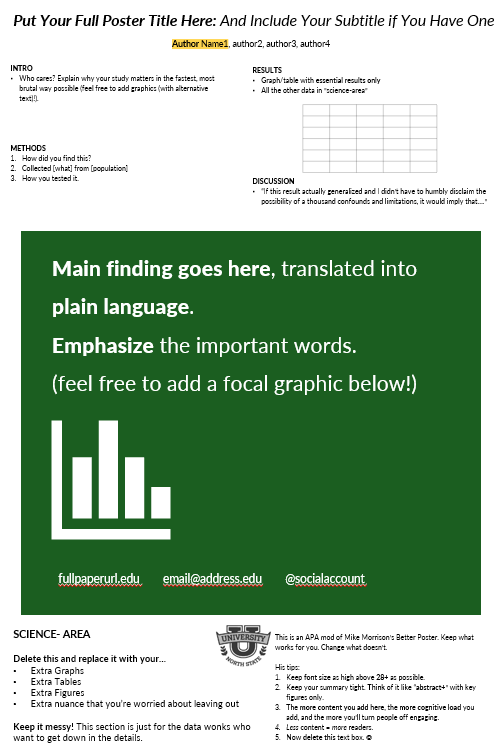
Poster sessions facilitate a researcher to discuss their research for an extended period and allow attendees to select the presentations in which they are most interested.
Poster size: A0 size or no larger than 36 inches by 48 inches. A smaller size is also permitted. VERTICAL/PORTRAIT orientation required for 2026.
Please consider using an engaging poster format such as the one described here. This should aid you in reaching your audience and getting the conversation started about your work.
***Please note, we are unable to print posters for presenters (or pay for poster printing), so please come to the conference prepared with your printed poster.
Want to save money on poster printing?
There are a few free options that you can find online to print a large image across multiple "regular" pages. It will require a little bit of trimming/scissor work, but these pages and some tape can save you some money if this is a barrier for you. Examples:
https://suncatcherstudio.com/block-poster/
Poster Session Information
Each poster area will include a number in the upper corner corresponding to the poster’s listed number found in the program. Poster presenters should arrive at the poster display area 15 minutes before the scheduled beginning of their poster session to set up their display materials. No electrical outlets or audio-visual equipment will be provided in the poster area. At the end of the session, your poster must be taken down and removed from the areas.
Magnets, tacks, or sticky putty will be provided for hanging your poster materials; if your poster requires any special materials that cannot be mounted via magnets or blue a painter's tape, it can not be displayed (per venue rules).
During the session, your materials should be on display and you and your co-authors should be available to discuss the materials and answer questions. At least one author must be present at the poster during the presentation period.
- What is Chapter/SIG World Conference submission sponsorship?
The "sponsorship" means that the Chapter/SIG members or leadership have put their support behind a presentation, as a quality representation of work in their field of study (SIG) or geographic area (Chapter). It means that the Chapter/SIG has reviewed and approved (and in some cases "spurred" the creation of) the submission. These can be any type of oral submission (paper, panel, etc.) or poster.
The Program review committee takes this information and gives those submissions extra consideration, because a group (Chapter or SIG) has already reviewed/approved the submission. Sponsorship does not guarantee acceptance of any particular submission.
Sponsorship also allows the particular SIG or Chapter to direct its members to items of interest while at the World Conference, which is a service given the complexity of our programs.
Sponsored submissions accepted for presentation will include "Sponsored by xxx SIG/Chapter" in the conference program, app, and online.
What do I need to know if I am submitting a session that has been sponsored?
If you would like to reach out to a Chapter and/or SIG for sponsorship, you will find contact information for each Chapter here and each SIG here.
The person who submits that particular session to the conference would indicate the sponsorship at the time of submission.
SIG and Chapter sponsored submissions receive more consideration than other submissions to the conference (as they have had a review and approval), but they are not guaranteed acceptance.
Presentations may be "co-sponsored" by more than one SIG/Chapter (usually for a "cross-over" topic).
What do Chapters and SIGs need to know?
SIGs and Chapters can each sponsor up to 3 oral presentation submissions (submitters indicate sponsorship while submitting). The method of review of your sponsored submissions is up to the individual SIG or Chapter, but we encourage you to involve your community, have a review process, and select submissions that you would like to support due to their quality and relevance to the Chapter or SIG’s mission.
If ACBS receives more than 3 submissions indicating sponsorship from one SIG/Chapter, the SIG/Chapter will be informed of the titles so that they can confirm which were sponsored.
Please use your sponsorship wisely to help the Program Committee and draw their attention to quality submissions in your area/topic. Again, this does not guarantee acceptance, but does lend the submission to extra consideration.
There is no further commitment by the Chapter or SIG beyond their initial review and agreement to "sponsor".
Need ideas for how to review sessions?
Use your SIG/Chapter listserv to recruit reviewers. Create a google form (or other submission method) to collect titles, author names, and draft abstracts, by 20 January (or 1 Feb., whatever timeline you can support), then review and notify submitters by 7 Feb. so that they have plenty of time to submit their session, with sponsorship, on the ACBS website.
Another idea is to craft a panel using your listserv. Email the listserv asking for cutting-edge ideas (relevant to your SIG) that would make for a good panel discussion at the conference and assign someone to chair it and recruit appropriate panelists.
BINGO
BINGOComment jouer :
Accomplissez l’action indiquée dans chaque case. Une fois terminée, cochez-la sur votre plateau de jeu pour tenter de gagner des prix exceptionnels ! Les publications peuvent apparaître sur n’importe quel réseau social, sauf indication contraire sur le plateau de jeu.
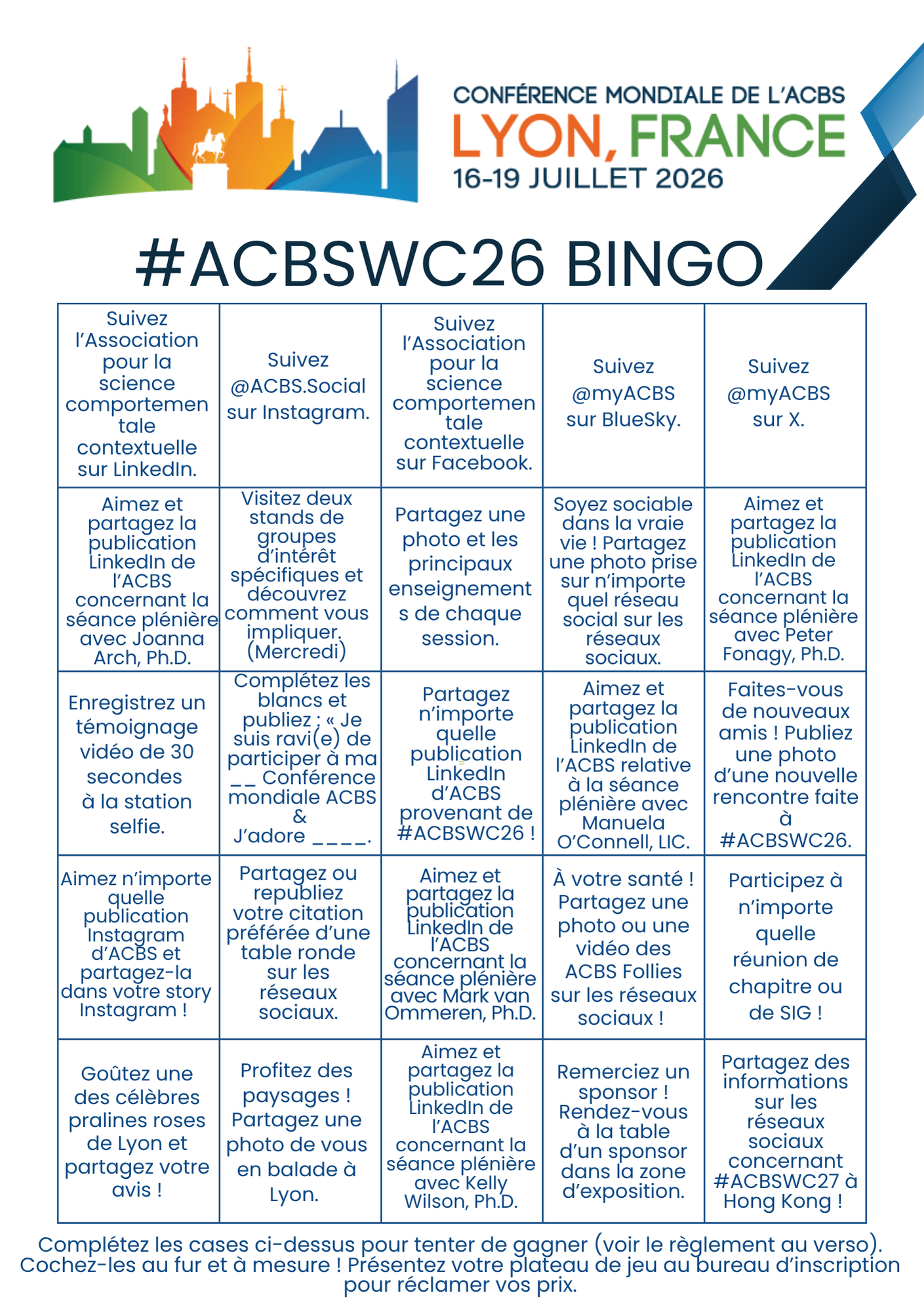
Règles:
- Tout participant à la conférence #ACBSWC26 peut jouer.
- Toutes les publications doivent inclure les hashtags #ACBS et #ACBSWC26.
- Pour être éligible au gain, vos publications doivent être vérifiées au bureau d’inscription avant 11h le dimanche 19 juillet.
- Règle la plus importante… AMUSEZ-VOUS !
Comment gagner :
Complétez les cases selon les motifs suivants pour gagner un prix. Vous pouvez gagner plusieurs fois. Une fois votre bingo terminé, veuillez rapporter votre grille à l’accueil pour recevoir votre ou vos tickets de tombola. Vous pouvez gagner jusqu’à cinq tickets et chaque lot ci-dessous ne peut être échangé qu’une seule fois.
- 5 numéros alignés (horizontalement, en diagonale ou verticalement) = 1 billet de tombola. Le gagnant peut choisir le ou les tirages au sort auxquels il souhaite participer.
- Remplissez 15 cases au choix = 2 billets de tombola supplémentaires. Le gagnant pourra choisir la ou les tombolas auxquelles il souhaite participer.
- Remplissez la carte en entier = 2 billets de tombola supplémentaires. Le gagnant pourra choisir le ou les tirages au sort auxquels il souhaite participer.
Prix de la tombola* :
- 50 % de réduction sur l’inscription à la conférence mondiale ACBS 2027 à Hong Kong.
- Atelier virtuel pré-conférence GRATUIT de votre choix en 2027.
- Inscription GRATUITE au Sommet virtuel ACBS 2026 : ACT et le corps, le 8 octobre 2026.
- Adhésion ACBS gratuite d’un an (renouvellement d’un an pour les membres actuels). [2 gagnants]
Les gagnants seront tirés au sort et informés d’ici le mardi 28 juillet.
*Prix non transférables à une autre personne, année ou événement.
Des questions ? Adressez-vous au bureau d’inscription.
First Timer’s Guide to the ACBS World Conference in Lyon
First Timer’s Guide to the ACBS World Conference in Lyon
Welcome!
We have compiled this guide to assist first-time conference attendees in making their time at the ACBS World Conference as productive and stress-free as possible. There’s no “right” way to attend the conference nor is there a set number of sessions or events to attend. You should attend the conference with the plan to make connections, learn, and have fun.
Planning for the Conference
Getting there: Check here for airport and train station transfer information to get you to the venue.
General Conference Schedule: Please find the schedule of events which will help you plan your days here - General schedule
What Should I Bring?
Snacks and a water bottle: ACBS provides lunch each day along with coffee/tea breaks in the morning and afternoon. If you’d like to supplement that, shop at the grocery store and stock up on fruit, granola bars, or energy bars – items that are portable and filling enough to sustain you throughout the day. Your brain will thank you!
Comfortable Shoes & Clothes: Bring your favorite comfortable shoes! ACBS conferences are a bit more informal than other similar conferences when it comes to dress. Most people wear slacks/shorts/jeans and a button-down shirt, blouse, or something similar. Be comfortable. (Oh, and a sweater is a good idea in case a room is chilly with air-conditioning!)
Writing Implements: Whether it's your phone, tablet, or paper/pen, please be sure to bring note-taking materials with you. To save on costs and the environmental impact of wasted paper, ACBS does not provide writing materials or printed versions of the program. The Program will be available as a PDF online and in the Conference App. Please note: During meetings, the use of any AI notetaking tools is prohibited. Participants are expected to rely on traditional methods of notetaking to ensure the confidentiality and security of the discussion. Read the full policy here.
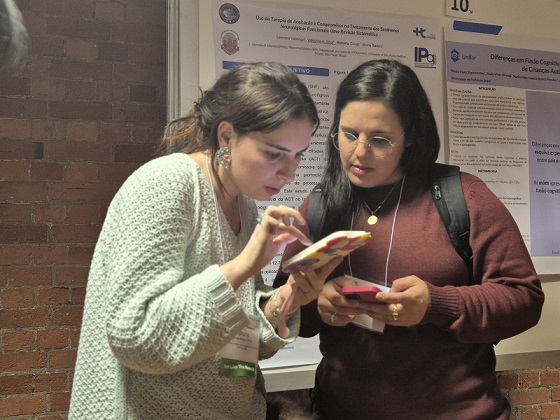
Choosing Conference Sessions (2026 Preliminary Program)
Sometimes selecting which of the approx. 120+ education sessions to attend requires some time. There is a lot of cool research, some really useful practical training, thought provoking invited speakers, and a wide variety of topics. Expand your horizons and have fun. Read through the sessions available. Keep a list of these available sessions, but don’t stress about definitively picking one over another. Feel free to add them to your agenda in the Conference App. You will end up chatting with other attendees about upcoming sessions and they may lean toward one or the other or even suggest one you had not considered. Another strategy is to find (or recruit) a buddy to attend a different session in the same time slot and then meet up afterward to share information.
You will notice there are several different types of sessions available throughout the conference. We’ve included a brief explanation of each type to assist with choosing your sessions:
• Workshops are training sessions of 1.5 or 3 hours and usually focus on a combination of experiential exercises, case conceptualization, role plays, and/or didactic teaching. The workshops July 16-19 are open to all conference registrants, no advanced registration is required for individual sessions.
• The Ignite presentation is a short, structured talk in which presenters present on ideas and issues they are most passionate about, using a “deck” of 20 slides that auto-advance every 15 seconds for a total of 5 minutes each.
• Symposia are a series of three to five 15-20 minute presentations focused on either empirical research or conceptual, philosophical, historical, or methodological issues. A discussant highlights and integrates the contributions of various speakers in the symposium and moderates questions from the audience.
• Invited Lectures are in depth, invited talks by researchers/trainers doing something especially awesome. These presenters have been specifically invited to provide new insights or depth to the conference. We encourage you to attend!
• Panel discussions consist of 3 to 6 speakers selected for some shared interest or expertise in an area. Panelists respond to one or more questions or issues, with time allotted for interaction among the speakers and with the audience.
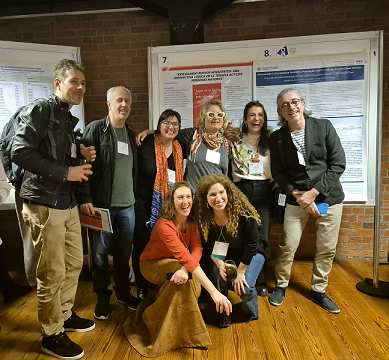
Networking at the Conference
The First Timer’s Event/Rookie’s Retreat: Attending this event can help you get oriented to the conference, get your questions answered, meet some attendees, and start your networking! ACBS Membership Committee volunteers will facilitate The First Timer’s Event/Rookie’s Retreat again this year. The event will be held on Wednesday, 15 July from 17:15-18:00 local time (location to be determined.)
Chapter/SIG (Special Interest Group) Meetings: You are welcome and encouraged to attend any Chapter and SIG meetings that are occurring during the conference which interest you. You do not need to be a member of these groups to attend and this is a great way to meet people who live locally to you or who have similar interests.
Evening and Social Events: ACBS conference social events (networking receptions, mixers, Follies, etc.) generally have high attendance. These events are a good opportunity to chat with others in a relaxed environment and have fun. You will find the schedule for evening and social events in the general schedule. More details will be provided as we get closer to the event.
Quick Tips
• Clothing: Lyon area temperatures in July are warm and sunny. Daily highs are predicted to be between 79-82 degrees Fahrenheit (26-28 degrees Celsius), and nighttime lows typically range from 59 to 62 degrees Fahrenheit (15 to 17 degrees Celsius.) Dress comfortably for hot days but pack a light jacket or sweater for evenings. Chance of precipitation is relatively low compared to other months, but sporadic summer thunderstorms can occur, so be prepared!
• All sessions from Thursday morning through Sunday afternoon are included with your conference registration. Workshops given during these times are complimentary.
• You will be meeting other therapists/researchers so be prepared to help them remember you by sharing your business card. If you don't have a business card, don't worry! ACBS is an informal conference and you can always ask to snap a picture of someone's name tag and message them later through our membership directory.
How do I sign up for individual sessions/workshops during the conference?
How do I sign up for individual sessions/workshops during the conference?All sessions during the ACBS World Conference are open to all paid conference attendees.
You don't have to sign up for individual sessions. You just go to the session/workshop you are interested in.
ACBS attempts to put the most popular sessions into the largest rooms, but sometimes the room assignment is too small for the interest. We apologize if a room is full before you arrive. Please consider arriving a few minutes early to your "must have" sessions.
(Note: Pre-Conference Workshops do require pre-registration and a separate fee to attend.)
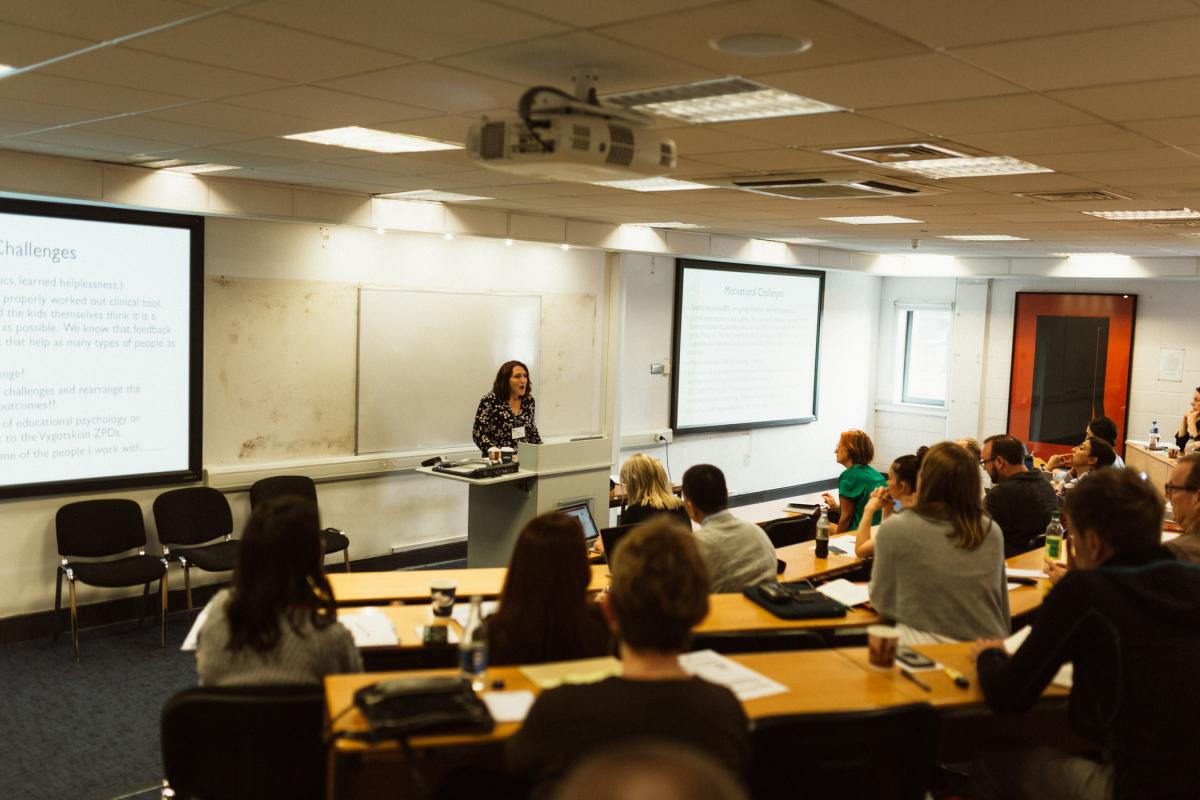
How much do workshops cost during the World Conference?
How much do workshops cost during the World Conference?Workshops given during the World Conference are free of charge.
(Note: Pre-Conference Intensive workshops have a separate fee and registration.)
.jpg)
Information about the Follies
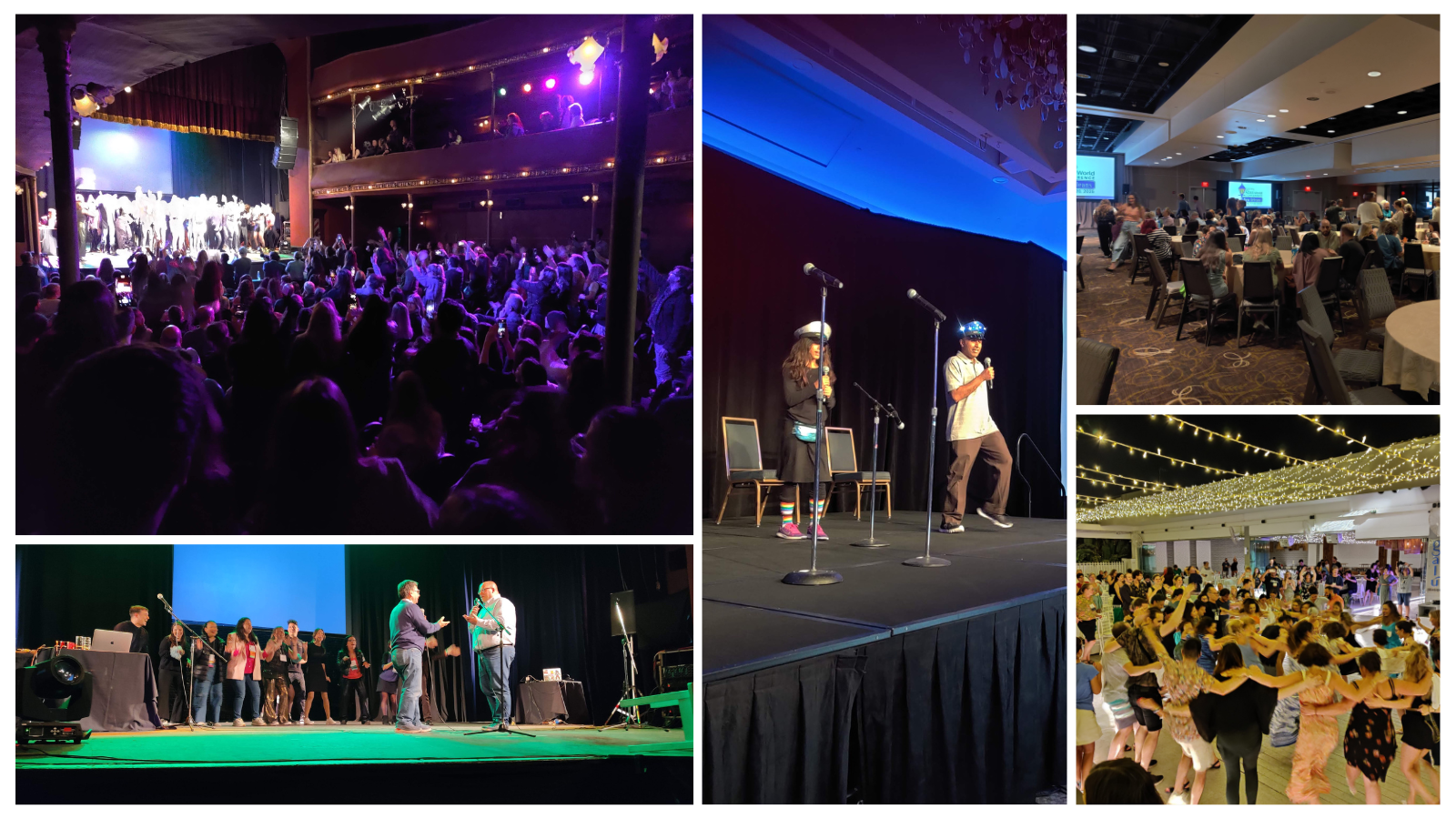
Information about the FolliesThe Follies is a unique feature of ACBS conferences. Basically, it’s a cabaret show, filled with funny songs, sketches, stand-up comedy routines, humorous PowerPoint presentations, pre-made videos, etc. And of all of this funny and talented content is created by the conference delegates! Get your creative powers focused, anything you have seen in the ACT world that deserves to be made fun of is fair game!
If you are attending the 2026 ACBS World Conference, you can join the Follies fun on Saturday, 18 July at 20h00 (doors open) 20h30 (start time). The 2026 Follies evening festivities will be located at the conference venue, UCLy, in the Merieux room.
All registered conference attendees are welcome, don't forget to bring your name badge! Drinks will be available, but may not be taken into meeting rooms. Unfortunately, guest tickets have been sold out and we are unable to accommodate additional guests.
The Follies is a unique feature of ACBS conferences. Basically, it’s a cabaret show, filled with funny songs, sketches, stand-up comedy routines, humorous PowerPoint presentations, pre-made videos, etc. Best of all, this funny and talented content is created by YOU: the conference delegates!
There are very few rules regarding the Follies content:
• First, keep it brief (around 3 minutes is perfect. Longer, and the shepherd’s crook will be sweeping you off the stage!)
• Second, an aspect of ACT, Mindfulness, Behaviorism, therapy, RFT, CBS or any of the people you know in the ACT/CBS Community is fair game to be (gently and kindly) mocked.
• Third, it has to be brief. Did we mention that?
To submit something for this year's Follies, send an email to the event organizers, DJ Moran and Dayna Lee-Baggley.
The Follies come from an important tradition: in the past ‘The Truth’ was what an authority deemed to be true. Then science came along, and people started to look to their direct observations to determine what was true. But of course, human beings love to categorize things in hierarchies, and began to automatically create hierarchies of people who could directly observe what was true and hence we have scientific authorities. The purpose of the Follies is to ensure that no idea, and no person in this community who has an idea, is immune to question, playfulness, and challenge. This event is open to BADGED conference attendees.
After Party
Want to keep the party going after the Follies? Check out these spots for the unofficial after party!
- Caffe Bobar (11 minutes walk) - Casual cocktails and bar snacks
- La Feria (30 minutes walk) - Latin bar with tapas and a dance floor
Policy Concerning the Use of AI Notetaking Tools During ACBS Events
Policy Concerning the Use of AI Notetaking Tools During ACBS EventsWith the advent of advanced technologies, AI notetaking tools have emerged as popular aids in capturing and transcribing meeting presentations and discussions. However, the use of such tools raises pertinent concerns regarding privacy, security, and the integrity of the information shared within these meetings.
ACBS is committed to protecting the confidentiality and privacy of all event participants. Sensitive information shared during events should be treated with the utmost discretion, and participants are encouraged to refrain from using any external devices or applications that may compromise this confidentiality.
Scope of the Policy
This policy applies to all attendees and presenters who participate in events at or sponsored by ACBS. It encompasses both virtual and in-person events, and covers all types of AI notetaking tools, including but not limited to transcription software, voice recognition applications, and automated meeting assistants.
Policy Guidelines
Prohibition of AI Notetaking Tools
During events, the use of any AI notetaking tools is prohibited. Participants are expected to rely on traditional methods of notetaking to ensure the confidentiality and security of the discussion.
Exceptions to the Policy
In certain circumstances, the use of AI notetaking tools may be permitted with prior approval from ACBS. Such exceptions will be evaluated on a case-by-case basis, considering factors such as the nature of the event, the sensitivity of the information discussed, accessibility related issues (including translation), and the potential benefits of using AI tools.
Implementation and Enforcement
Communication of the Policy
The policy will be communicated to all attendees and presenters through official channels, including the organization's intranet, email notifications, and training sessions. Participants will be reminded of the policy prior to the event, via email, to ensure compliance.
Monitoring and Compliance
Event organizers and presenters are responsible for monitoring adherence to the policy. In virtual settings, AI notetaking tools will be removed from events. No refunds will be provided.
Review and Revision
The policy will be reviewed periodically to ensure its relevance and effectiveness. Any amendments to the policy will be communicated to all relevant parties in a timely manner.
Conclusion
This policy on AI notetaking tools during events is a measure aimed at protecting intellectual property, sensitive information, and fostering a secure communication environment. By adhering to this policy, participants can contribute to a culture of trust and reliability, where the privacy and accuracy of event presentations and discussions are preserved.
Poster Guidelines
Poster GuidelinesPlease consider using this innovative poster format, as we believe it will increase both efficiency and effectiveness in poster preparation and communication of data. (This format is not required, but strongly suggested.)
Find more information about this poster format here and download the template below.
Poster sessions facilitate a researcher to discuss their research for an extended period and allow attendees to select the presentations in which they are most interested.
Poster size: A0 size or no larger than 36 inches by 48 inches. A smaller size is also permitted. VERTICAL/PORTRAIT orientation required for 2026.
Please consider using an engaging poster format such as the one described here. This should aid you in reaching your audience and getting the conversation started about your work.
***Please note, we are unable to print posters for presenters (or pay for poster printing), so please come to the conference prepared with your printed poster.
Want to save money on poster printing?
There are a few free options that you can find online to print a large image across multiple "regular" pages. It will require a little bit of trimming/scissor work, but these pages and some tape can save you some money if this is a barrier for you. Examples:
https://suncatcherstudio.com/block-poster/
Poster Session Information
Each poster area will include a number in the upper corner corresponding to the poster’s listed number found in the program. Poster presenters should arrive at the poster display area 15 minutes before the scheduled beginning of their poster session to set up their display materials. No electrical outlets or audio-visual equipment will be provided in the poster area. At the end of the session, your poster must be taken down and removed from the areas.
Magnets, tacks, or sticky putty will be provided for hanging your poster materials; if your poster requires any special materials that cannot be mounted via magnets or blue a painter's tape, it can not be displayed (per venue rules).
During the session, your materials should be on display and you and your co-authors should be available to discuss the materials and answer questions. At least one author must be present at the poster during the presentation period.
Selfie Station
Selfie StationPrenez un selfie ou partagez votre histoire.

Prendre une photo
Installez-vous devant le décor, saisissez un accessoire — et peut-être un ou deux amis — et immortalisez l'instant !

Enregistrer une vidéo
Nous voulons vous entendre !
Partagez ce que vous préférez dans le fait d'être membre de l'ACBS ou ce que vous avez le plus apprécié lors d'une conférence mondiale de l'ACBS. Veillez à ce que votre vidéo soit courte et concise (30 à 60 secondes) pour avoir une chance d'être mis en avant dans une prochaine campagne de communication !
Social Media Toolkit
Social Media ToolkitThank you for registering for the 2026 ACBS World Conference!
Now it’s time to share the excitement—let your network know you’re heading to #ACBSWC26!
You’re officially on the list for an unforgettable experience from 16–19 July 2026 in Lyon. One of the things we’re most proud of is our global community—and now it’s your turn to shine. Invite your colleagues, collaborators, and friends to join you for cutting-edge research, inspiring sessions, and connections that span the globe.
This toolkit gives you everything you need—ready-to-use graphics, sample posts, and more—to make sharing simple, fun, and impactful. Let’s make some noise together and get your network excited for #ACBSWC26!
Social Media Graphics
Below are branded graphics for you to choose from. (Right click to save) 
Social Media Copy
Below are examples of social media posts for you to use or customize as you see fit. Please remember to tag ACBS and use #ACBSWC26 #ACBS to assure that your posts are promoted among the global ACBS community. Feel free to edit and spice up as you see fit!
- Excited to be heading to Lyon this July at the 2026 ACBS World Conference! Join me and colleagues from around the world for cutting-edge research, meaningful conversations, and new connections that move our field forward. https://bit.ly/48REAPU
#ACBS #ACBSWC26 - Heading to Lyon this July for #ACBSWC26! Can’t wait to connect, share ideas, and explore the latest advances in contextual behavioral science with colleagues from around the globe. Hope to see you there! https://bit.ly/48REAPU #ACBS
- Join me this July in Lyon for the 2026 ACBS World Conference where science, practice, and community come together. Experience the latest in contextual behavioral science and connect with leaders shaping the future of our field. https://bit.ly/48REAPU
#ACBS #ACBSWC26
Email Signature
A one-liner in your email signature can be a quick and easy way to bring attention to your speaking role at #ACBSWC2026. Here are a couple of options—customizable, of course—to help you spread the word!
- Excited to be attending the 2026 ACBS World Conference in Lyon, 16–19 July! Connect with me there or learn more.
- Heading to the 2026 ACBS World Conference this July! Join me in Lyon for cutting-edge research and global connections.
Option to add the conference logo to your signature as well using this link: https://bit.ly/4oHLRq6
Tips for Submissions
Tips for SubmissionsGeneral:
-
Citing research and presenting data (original or a review of data) is highly encouraged for all submission types.
-
Make sure that your submission for a workshop/panel/etc. is appropriate for that format. Panel submissions that sound more like workshops are unlikely to be accepted and vice versa.
-
Submissions should weigh the value of diverse voices against too many presenters to make it coherent. ACBS encourages (and depending on topic may require) panels/workshops to include a diverse complement of presenters (demographic diversity as well as diversity in areas of expertise), but not to the detriment of a coherent, we'll crafted session. Please consider the practicality of coordinating a quality session among too many presenters.
-
Please accurately indicate if your submission is beginner, intermediate, or advanced. Please craft your submission to fit the audience you indicate. You do not have a better chance of being accepted if you choose all 3.
-
If your expertise is in a very narrow area (ex. 55-57 year olds with trauma history), we encourage you to craft your workshop/panel submission to meet the needs of a wider audience. Your examples/demonstrations should of course be from your area of expertise, but we encourage that your abstract and title be accessible to more potential attendees.
-
Make sure your abstract is clear and well written (have multiple people proofread it before submitting). Unclear or poorly written abstracts have a lower chance of being accepted.
-
Make sure your abstract explains skills or information an attendee will walk away with at the conclusion.
-
Background like “Acceptance and Commitment Therapy is a behavioral-based…..” isn’t necessary in your abstract. If you feel you need to persuade reviewers that your topic is important (but that background information isn’t relevant for an abstract to entice attendance) please add that to the “additional information” field at the end of the submission form.
-
Create actual educational objectives - what the attendees should be able to do as a result of attending your session. (Read the examples/descriptions of what an objective is in the submission form before writing yours.)
-
Post-test questions (required so that Continuing Education credit may be earned by those watching recordings of the live sessions), can often be developed (at least in part) from your education objectives. You can do up to 2 true/false questions and the remainder need to be multiple choice. These questions don't have to be "extra tricky", they're just intended to gauge comprehension of information presented.
Specific to Workshops:
-
Be realistic about what you are going to be able to do in the time available and about the time you need (don’t try to squeeze a 2 hour workshop into a 1 hour slot; adjust for the time).
-
Workshops should not be didactic with a single exercise included at the end. This is a common mistake. Please consider multiple components (experiential exercises, role-plays, case conceptualizations, etc.) to make your workshop more appealing and useful. These should be woven thoughtfully throughout your workshop.
-
Consider the unique opportunities available in the online format (if applying to present online). Not only can you plan for break out rooms, you can create polls, and ask people to indicate understanding/interest through the use of emoticons (thumbs up, etc.).
Volunteer Opportunities during the World Conference
Volunteer Opportunities during the World ConferenceACBS is a small staff association. We NEED volunteers to help us pull off the amazing event that is the ACBS World Conference.
If you have skills that could help us in Lyon, France - please let us know!
Important information:
- We will accept volunteers based on their skill set match with conference needs and their intended time commitment/general flexibility.
- Contacted volunteers will need to register for the ACBS World Conference before your spot will be confirmed (by 1 June).
- Any financial discount for volunteering is done as a refund, and is paid upon the completion of volunteer activities.
If you have any questions please email Renae Visscher, [email protected]
What are Educational Objectives?
What are Educational Objectives?Educational Objectives are required for sessions to be eligible for Continuing Education (CE) credit.
Writing Educational Objectives (according to the APA):
- Educational objectives, or learning outcomes, are statements that clearly describe what the learner will know or be able to do as a result of having attended an educational program or activity.
- Educational objectives must be observable and measurable.
- Educational objectives should (1) focus on the learner, and (2) contain action verbs that describe measurable behaviors
- Verbs to consider when writing Educational objectives:
- list, describe, recite, write
- compute, discuss, explain, predict
- apply, demonstrate, prepare, use
- analyze, design, select, utilize
- compile, create, plan, revise, summarize
- assess, compare, contrast, rate, critique
- Verbs to avoid when writing Educational objectives
- know, understand, learn, become aware of, become familiar with, have a working knowledge of
- be able to use, help clients respond to, approach, tweak
- expand, grow, increase, improve
- explore, express, appreciate, think critically
Examples of well-written Educational objectives:
- Implement traditional exposure-based interventions as adapted for an acceptance-based model.
- Describe the role and significance of avoidance in the development and maintenance of psychopathology.
- Conduct a full-scale values assessment with clients.
Examples of poor Educational Objectives:
- Hear the latest research about ACT. (not learner-focused; not about measurable behaviors)
- See a role-play. (not learner-focused; not about measurable behaviors)
What does a Chairperson do?
What does a Chairperson do?The Chairperson for a PANEL should prepare to briefly introduce each Panelist. Keep it brief and relevant, so as not to take up lots of precious session time. Introduce all Panelists at the beginning of the session. Panels vary in their format, some have each panelist give 10 minute presentations followed by a discussion/debate by the panelists, some require the Chair to pose pre-arranged questions, some feed solely off of audience questions. The Chair is responsible for knowing or establishing the format and facilitating it (perhaps by asking the questions or calling on the audience members). If the panel gets off track (or off topic) it's the Chair's responsibility to bring them back to the topic, and make sure that the Educational Objectives listed in the Program are met/covered. Please keep in mind though that the Chair is not a Panelist (unless they are scheduled in both roles) and should make sure not to speak at length. If the Q&A is still going strong at the end of the scheduled time period, please thank the presenters, and announce that if the audience has any more questions, the presenters may be able to give them a few minutes in the hallway for remaining questions. This is necessary if another session is starting in 15 minutes (so that the next presenters can begin to prepare in the room) and so that those audience members that need to leave can do so (without disrupting the session) at the conclusion of the time period. It is the responsibility of the Chairperson to make sure that the session begins on time. Please make sure you have a watch.
Here's another cool article about Panel chairing for some other tips.
The Chairperson for a SYMPOSIUM should prepare to briefly introduce each speaker, immediately prior to his/her presentation (this can be as minimal as Name, Affiliation, Paper title; or a little more substantive if desired, but still brief.) It is also your responsibility to monitor the timing of each speaker. (Each session may have slightly different timing... if the session is 60 minutes, with 3 papers, each paper would be 10 minutes, then 15 minutes of time for the Discussant, followed by Q&A. If the session is 60 minutes with 4 papers, each paper would get 10 minutes, 10 minutes for the Discussant, and the remainder for questions.) If there is no Discussant, each presenter may have more time, or you can opt for a longer Q&A period.
Briefly tell each speaker, prior to the session something like "I'll keep the time on my watch. Each speaker has 10 minutes. I'll raise my hand in the back of the room when you have 5 minutes, and I'll raise my hand and hold up 1 finger when you have 1 minute left." You may put notecards on the lectern with the amount of time left, if you prefer. (The set up of the room may or may not permit this.) If the presenter does not stop at the end of their time, please kindly interrupt them (verbally), and ask them to wrap up so that the next presenter may begin. (The audience will thank you!) The Question & Answer period for all papers should occur at the end of the session (not after each presentation). Please just make sure that everyone gets a fair and equal amount of time. (If the first person has a short talk, the extra time may be divided among the remaining speakers.) It is the responsibility of the Chairperson to make sure that the session begins on time. Please make sure you have a watch.
.jpg)
What does a Discussant do?
What does a Discussant do?A discussant is the final speaker in a SYMPOSIUM who highlights and integrates the contributions of various speakers in that symposium. That is, they use their expertise to provide a general commentary on individual papers within the session and explore how the papers (in relation to each other) help advance the topic. Discussants should plan to discuss the session for approximately 10 minutes, depending upon the time available, and then moderate questions from the audience. Discussants should directly request the papers (or at least the outlines) from the presenters before the conference, and prepare by reading related work prior to the conference.
.jpg)
What is Chapter/SIG World Conference Submission Sponsorship?
What is Chapter/SIG World Conference Submission Sponsorship?You can find the important details regarding Chapter/SIG Submission Sponsorship here.