Andrés Jacob Beltrán Gabrie, Michigan, USA
Could you please tell us a little about you and your background?
I am a Clinical Psychology Ph.D. student at Western Michigan University and an international student from Chile. I completed my undergraduate training in psychology at the University of Chile, where I worked as a clinical psychologist, instructor, and peer tutoring coordinator. My clinical and research interests focus on evidence-based psychotherapy, particularly Acceptance and Commitment Therapy, psychological flexibility, and the role of bilingualism in mental health among marginalized populations. My overarching goal is to improve access to high-quality psychotherapy. I am committed to advancing culturally responsive psychological research and practice and to contributing to underserved and diverse communities through both clinical work and academic training.
How did you become interested in CBS?
My interest in Contextual Behavioral Science (CBS) developed gradually over the course of my training in psychology. Early in my education, I was drawn to other theoretical orientations, but I often felt that something was missing, particularly a strong connection to empirical evidence and a clear understanding of why treatments work, beyond simply knowing that they are effective. The focus on mechanisms of change deeply resonated with me, and I became increasingly interested in approaches that sought to understand and target these processes.
This led me to explore the work of B. F. Skinner, whose scientific perspective on human behavior was transformative for me. His emphasis on prediction, influence, and the functional analysis of behavior fundamentally changed how I understood psychology. From there, I discovered Contextual Behavioral Science and recognized that it provided the philosophical, scientific, and clinical framework I had been searching for. CBS integrated my interest in rigorous science, mechanisms of change, and meaningful clinical application, and I realized that this was the intellectual and professional home where I belonged.
Could you tell us about your research and application interests?
My research and application interests broadly focus on understanding mechanisms of change in psychology and how specific processes influence human suffering and well-being. I am particularly interested in how evidence-based interventions can be adapted and disseminated to better serve Latin American and other underserved populations.
One of my early research projects involved developing and evaluating a vocational exploration intervention based on Acceptance and Commitment Therapy (ACT), with a specific focus on the values clarification component. This work strengthened my interest in how values-based processes can support meaningful behavior change. I have also studied the relationship between bilingualism and psychological flexibility, examining whether navigating multiple languages may influence core processes targeted in Contextual Behavioral Science.
More recently, my work has focused on the application of ACT to support parents of children with behavioral difficulties, particularly exploring how ACT processes may reduce parental stress and enhance the effectiveness of behavioral parent training programs such as Parent Management Training (PMT). In addition, I have been involved in research aimed at improving access to evidence-based psychological interventions for pediatric populations within primary care settings.
Ultimately, my goal is to contribute to the development, adaptation, and dissemination of evidence-based, process-focused interventions. I believe that evidence-based psychotherapy should be accessible to everyone, especially those who face the greatest barriers to receiving high-quality psychological care.
Could you tell us about your experience at the World Conference this year?
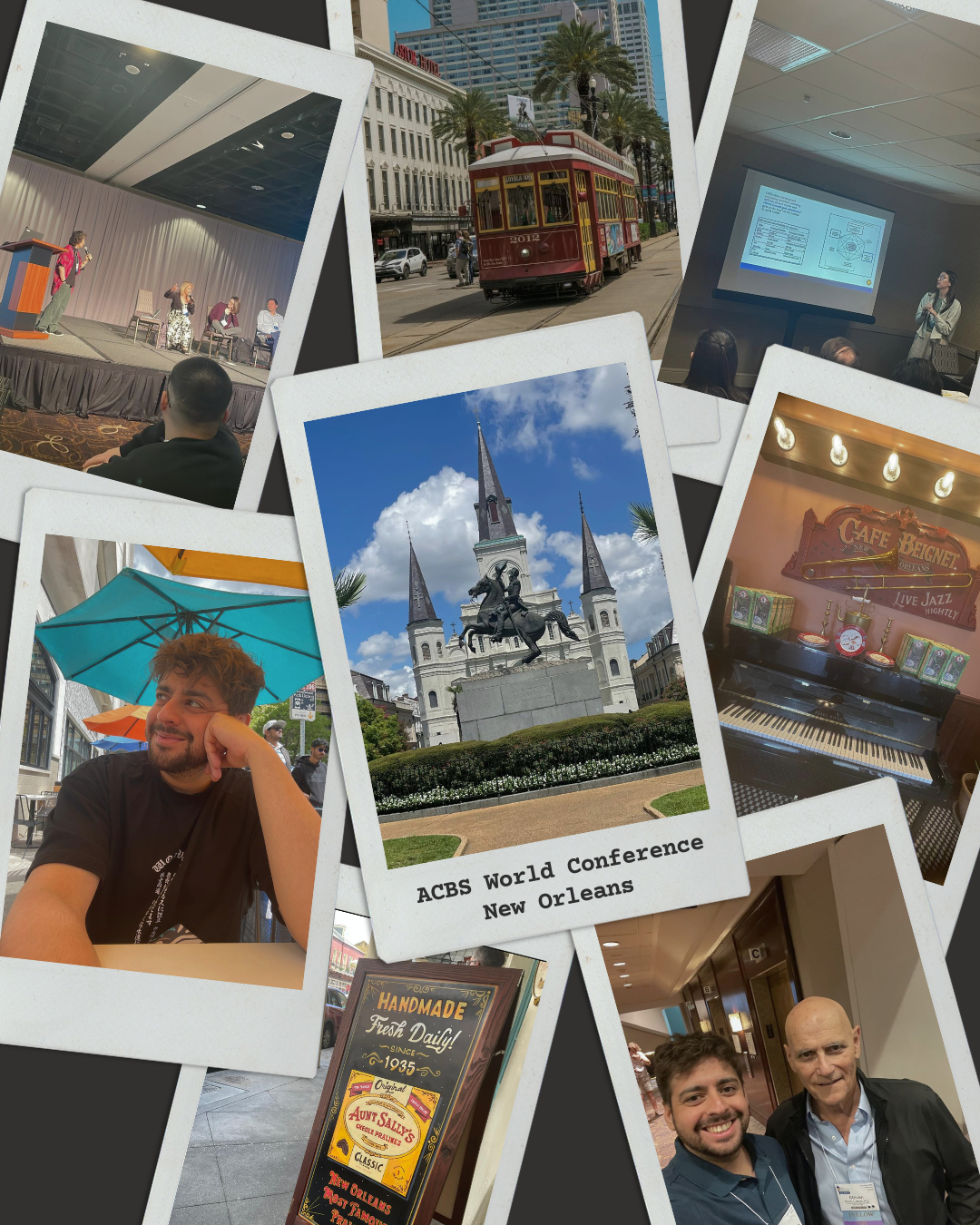
Attending the Association for Contextual Behavioral Science World Conference was an excellent and meaningful experience. I had the opportunity to present two research projects and to participate in more than a dozen symposia, workshops, and presentations. Sharing my work and receiving feedback from researchers and clinicians whose work I deeply admire was both inspiring and professionally valuable.
The conference in New Orleans was especially memorable. Beyond the unique energy and culture of the city, the conference represented an important milestone in my development as a psychologist. It was the first time I was able to connect in person with members of the global Contextual Behavioral Science community, people from diverse countries and backgrounds who share a commitment to advancing CBS and improving human well-being.
This experience strengthened my sense of belonging within the CBS community and reinforced my commitment to contributing to its scientific and clinical mission.
Was there anything that stood out to you about the CBS community?
One of the things that stood out most to me about the Contextual Behavioral Science community was how approachable and generous people were with their time. I was genuinely surprised by how open established researchers and clinicians were to conversation, questions, and the exchange of ideas. I had initially assumed that many would be too busy to engage meaningfully, but the opposite was true, people were there not only to share their work, but also to connect, support one another, and build relationships.
I believe the word “community” is especially meaningful in the ACBS. It is not just a label, but something that is actively embodied in how members interact. It is rare to find intellectual spaces that combine scientific rigor with such openness, humility, and genuine human connection. Experiencing this sense of community was one of the most impactful aspects of the conference for me.
What did you take back from your experience that has been helpful to you?
It is difficult to summarize everything I took from the experience, as it was meaningful in many ways. If I had to highlight a few key aspects, I would emphasize the human quality of the community and its deep commitment to evidence-based psychology with the ultimate goal of alleviating human suffering. Being surrounded by people who share these values was both inspiring and reaffirming.
I was also able to build meaningful professional connections, meet colleagues from different countries, and even strengthen relationships with professionals from Chile whom I had not previously known, despite sharing similar interests. In fact, I have remained in contact with some of them, and we continue to exchange ideas and support each other’s work. It is remarkable how these connections have extended beyond the conference itself and have become part of an ongoing professional network.
Overall, I brought back not only new knowledge, but also a stronger sense of belonging and renewed motivation to contribute to the CBS community and its mission.
Do you have anything else that you would like to share with the community?
The CBS represents more than just a supportive community, it provides a dedicated space for meaningful reflection on human suffering and pathways to alleviate it, while maintaining an unwavering commitment to rigorous, high-quality scientific research. Participating in the conference was a transformative experience, and I look forward to engaging in future conferences.