This workshop is full - REGISTRATION CLOSED
To see other available Pre-Conference Workshops click here!
ACT Beyond Protocols: Finding Beauty in the Midst of Darkness
 Presented in English, also available for session attendees (in Lyon) via simultaneous AI (artificial intelligence) translation software in 50+ languages. More details available here.
Dates and Location of this IN-PERSON 2-Day Workshop:
IN-PERSON at Catholic University of Lyon (UCLY)
Tuesday, 14 July 2026 from 9:00 - 17:00 Central European Summer Time
Wednesday, 15 July 2026 from 9:00 - 17:00 Central European Summer Time
Contact Hours: 13
Workshop Leader:
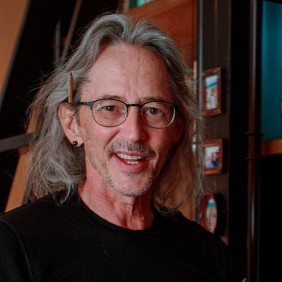 |
| Kelly G Wilson, Ph.D. |
Workshop Description:
Beginning in the mid-1980s, clinical psychology borrowed a scientific template designed for testing drugs—and quietly reshaped psychotherapy in its image. Treatment manuals became the “active ingredient,” DSM diagnoses became the disease, and randomized trials became the arbiter of legitimacy. This metaphor has been costly. It has distorted how we think about psychotherapy, how we train clinicians, and what we count as clinical knowledge.
Psychotherapy is not a pill. It is not inert, stable, or independent of the person delivering it. An antibiotic works the same no matter who hands you the pill. But who the therapist is matters—how they listen, how they respond, how they participate. The therapist is not a vessel from which a protocol is poured. And psychological suffering is not disease. Despite its claims to neutrality, the DSM rests on a latent disease model that treats syndromes as placeholders for to-be-discovered diseases. But most DSM categories function more like symptoms than illnesses—signals that invite process-level understanding rather than diagnostic finality.
Good therapy does not simplify this complexity; it works inside it. And in doing so, it can free people to live with more openness and vitality. The discomfort of not knowing precisely where the arc of therapy will take us is not a flaw—it is a feature.
From this perspective, psychotherapy is creative work. It is co-constructed, moment by moment, by therapist and client. While many frameworks offer guiding principles, my own work is grounded in contextual behavioral science. I will not offer a procedural roadmap. Instead, I will focus on the phenomenology of the work, while remaining faithful to underlying processes.
Every major psychotherapy model began as a process-based approach. Psychoanalysis never lost sight of process. Early behavior therapy and later cognitive therapy were also built from process models, even as they diverged in emphasis. Importantly, the treatments we now label “evidence-based” were developed before the DSM had stabilized and before modern RCTs existed. They emerged from theory, observation, and sustained engagement with individual lives. It may be time to question whether our fixation on averages has cost us attention to what actually moves therapy forward, here and now.
ACT does not divide the world into sick clients and healthy therapists. We are not different kinds of beings. Some suffering is more acute, more constraining, more unjust—but the roots of suffering are shared. If you look honestly at your own struggles, you will find echoes of the struggles that bring people to therapy. This is a tremendous asset and properly understood can help you to guide treatment.
Language-capable humans are uniquely vulnerable to suffering because of language itself. We do not merely feel pain—we narrate it, revisit it, anticipate it. We suffer that we have suffered, and that we might suffer again. Our primary response is problem-solving, a mode of mind that has enabled extraordinary human achievements. It also produces endless stories—about who we are, what is possible, and what must (or must never) happen in order for life to improve.
Some stories expand life. Others quietly shrink it. They impose limits that feel necessary, inevitable, and “true.” And once life becomes small enough, people stop imagining anything else. They learn to live inside the ache.
Many clients arrive having once expected more from life—and having slowly given that expectation up. Some because the world disappointed them. Some because they concluded they were undeserving. Some because they never learned to imagine otherwise.
ACT rests on a basic science suggesting that these stories need not make a prison of life. Their grip can loosen. When it does, life does not become easy—but it often becomes wider, richer, and worth every ache and pain.
This workshop will approach ACT as lived practice rather than protocol. It will be experiential and creative. Work with self and identity will be woven throughout acceptance, defusion, present-moment awareness, values, and committed action—not as an add-on, but as a central thread. We will examine these processes from the inside out.
Although this workshop is not an introduction to ACT, it will be conducted in plain language, with an emphasis on staying close to lived experience. No prior background in ACT is required. For those familiar with ACT, the workshop will deepen understanding of core principles and expand the capacity to use them flexibly in the service of therapeutic connection. The workshop is appropriate for beginners and veteran therapists alike.
Principles will be introduced sparingly. Most of our time will be spent doing the work—so that what happens here changes how you sit with your very next client.
About the Workshop Leaders:
- Kelly G Wilson, Ph.D.
Kelly G. Wilson, Ph.D., is Professor Emeritus of Psychology at the University of Mississippi and a co-founder of Acceptance and Commitment Therapy (ACT). He is the author of over 100 articles and chapters and eleven books, including Mindfulness for Two, Things Might Go Terribly, Horribly Wrong, and Terapia de Aceptión y Compromiso: Un Tratamiento Conductual Orientado a los Valores. Dr. Wilson is known for his deeply human, story-infused teaching style and his emphasis on the emotional and relational core of ACT. He has led workshops in over 40 countries, training clinicians in contextual behavioral science and the art of therapeutic presence. His work integrates behavioral science, mindfulness, compassion, and an abiding appreciation for lived human experience.
Following this workshop participants will be able to:
- Describe how the adoption of medical and pharmacological research models in the late 20th century influenced prevailing assumptions about psychotherapy, therapist roles, and treatment development.
- Differentiate protocol-driven psychotherapy from process-based approaches, including how each model organizes therapist–client collaboration in clinical practice.
- Identify therapist variables (e.g., presence, responsiveness, participation) that function as active components of the therapeutic context.
- Explain how a process-oriented understanding of psychological suffering supports collaborative case formulation and ongoing clinical decision-making.
- Demonstrate the ability to notice and track, in real time, shifts in therapeutic dialogue between contexts of limitation and contexts of possibility.
- Apply ACT-consistent, collaborative methods to explore with clients how verbal narratives, rules, and self-stories influence lived experience and behavioral flexibility.
- Integrate work with self and identity into acceptance, defusion, present-moment awareness, values, and committed action through shared experiential practice.
- Use the principles slow is fast, small is big, and less is more to guide the pacing and sequencing of collaborative therapeutic interactions.
- Formulate values-based therapeutic directions and next steps collaboratively with clients, grounded in the client’s current context and expressed values.
- Engage in experiential exercises and structured dialogues that enhance the therapist’s capacity for flexibility, presence, and creativity in the face of clinical uncertainty.
Target audience: Beginner, Intermediate, Advanced, Clinical
Components: Conceptual analysis, Experiential exercises, Didactic presentation, Roleplay, interviewing to foster creativity
Topic Areas: Clinical, Theoretical and philosophical foundations
Package Includes: A general certificate of attendance
CE Credit Hours Available (13 hours): CEs for psychologists