2025 Dissemination Activities
2025 Dissemination Activities office_1Brazil Dissemination Activities 2025 - Virtual attendance
Brazil Dissemination Activities 2025 - Virtual attendanceJordana Fontana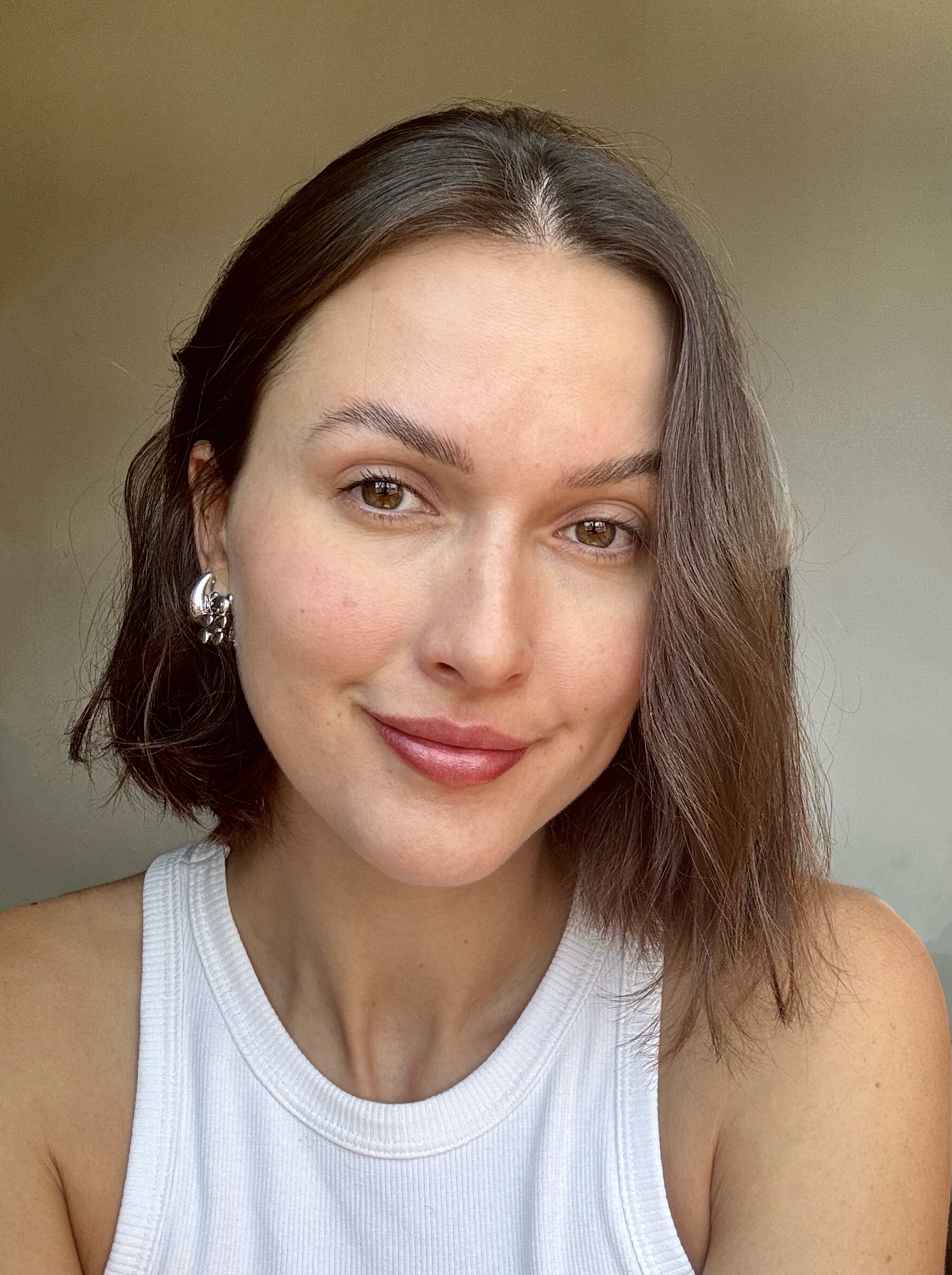
Could you please tell us a little about you and your background?
I am a clinical psychologist with a PhD in Behavior Analysis. Since the beginning of my graduate training, my research and professional interests have been centered on women’s experiences and the social conditions that shape their lives. During my master’s degree, I investigated the concept of a culture of domination from a behavior-analytic perspective, examining how cultural contingencies contribute to the shaping of female behavioral repertoires.
In my doctoral research, I developed and evaluated a training program designed to prepare psychology students to provide psychological care to survivors of sexual violence. This work combined behavior-analytic principles with ethical and contextual considerations relevant to trauma-informed clinical practice.
In addition to my academic background, I have formal training in Functional Analytic Psychotherapy (FAP) and consistently seek to integrate concepts from contextual behavioral therapies into my clinical and research work. My current professional focus involves connecting these theoretical frameworks with the lived experiences of women, particularly in relation to power, relationships, and social vulnerability.
How did you become interested in CBS?
My interest in contextual behavioral therapies emerged through readings and lectures, when I recognized their potential to significantly expand the range of possible interventions in clinical work with women. This perspective has guided my ongoing efforts to connect behavior-analytic principles with the lived experiences of women, particularly in contexts marked by power asymmetries, trauma, and social vulnerability.
Could you tell us about your research and application interests?
As previously mentioned, my research has consistently focused on women. Currently, as my clinical practice is exclusively dedicated to working with women, I consider it essential to understand the principles emphasized by contextual behavioral therapies. Clinical work with women often extends beyond the individual level, as many forms of suffering are closely related to cultural and social factors.
As was evident during the workshop, processes of “othering” play a significant role in shaping distress and relational dynamics, and therefore must be considered within the clinical context. In this sense, the application of Acceptance and Commitment Therapy (ACT) that takes collective and relational dimensions into account is particularly relevant for addressing the complex challenges faced by women in contemporary society.
Could you tell us about your experience at the World Conference this year?
The workshop “Staying Prosocial as Things Fall Apart” addressed contemporary challenges related to the weakening of social bonds, increasing polarization, and difficulties in sustaining cooperation in contexts of social, political, and environmental crisis. In a global landscape marked by fragmentation, collective stress, and the erosion of community life, the workshop was grounded in the understanding that the capacity to remain prosocial is essential for building effective, ethical, and coordinated collective responses.
My primary interest in participating in this workshop was centered on Acceptance and Commitment Therapy (ACT), particularly its extension from individual clinical practice to relational and group contexts. Over the course of the workshop, it became clear how core ACT processes—such as psychological flexibility, values clarification, acceptance, cognitive defusion, and committed action—can be applied beyond the individual level to support more resilient, collaborative, and purpose-driven groups.
The workshop offered a thoughtful exploration of how rigid behavioral patterns, defensive responses, and social polarization tend to intensify under conditions of uncertainty and threat. From an ACT perspective, these reactions were framed as understandable responses to distress that can nevertheless become harmful when they dominate individual and collective functioning. Participants were invited to develop greater awareness of stress responses and defensiveness, both personally and within groups, in order to respond with greater compassion, flexibility, and effectiveness.
A particularly valuable aspect of the workshop was its experiential format. Through perspective-taking exercises, guided reflection, and relational practices, participants engaged directly with processes that foster connection, shared understanding, and collaboration across differences. These experiential components demonstrated how groups can cultivate shared purpose and identity while still honoring diversity, supporting inclusion without suppressing disagreement or complexity.
Rather than focusing on abstract solutions, the workshop emphasized grounded, values-oriented engagement. It highlighted the idea that meaningful change does not require perfect conditions or large-scale interventions, but can begin in local contexts when actions are aligned with personal and collective values. This emphasis contributed to a sense of agency and hope, reinforcing the possibility of sustained prosocial engagement even amid instability and social fragmentation.
Overall, the workshop reinforced the relevance of ACT-based principles for understanding and addressing collective challenges. By extending psychological flexibility to the group level, the workshop offered a coherent and practical framework for strengthening relationships, supporting cooperative behavior, and fostering collective responses oriented toward care, responsibility, and long-term social transformation.
Was there anything that stood out to you about the CBS community?
What stood out to me about the CBS community, as experienced through this workshop, was the way the space was facilitated to promote closeness and connection. The structure and tone of the workshop made participants feel comfortable engaging with one another, as well as with the facilitators themselves. This created an environment in which dialogue felt accessible, relational, and grounded, rather than hierarchical or distant.
What did you take back from your experience that has been helpful to you?
This experience was particularly useful for my clinical work with women, as it reinforced the importance of understanding psychological suffering within its broader social and relational context. The workshop helped me reflect on how processes such as stress, defensiveness, and “othering” are not only individual phenomena, but are often shaped by cultural dynamics that many women are exposed to in their daily lives.
The emphasis on psychological flexibility and values-based action supported a more nuanced understanding of how to work therapeutically with experiences related to power, exclusion, and social expectations. This perspective is especially relevant in clinical settings, where women’s distress frequently reflects tensions between personal values and restrictive cultural narratives. Overall, the workshop offered insights that can strengthen clinical interventions by integrating individual processes with relational and collective dimensions of experience.
Brazil Dissemination Activities 2025
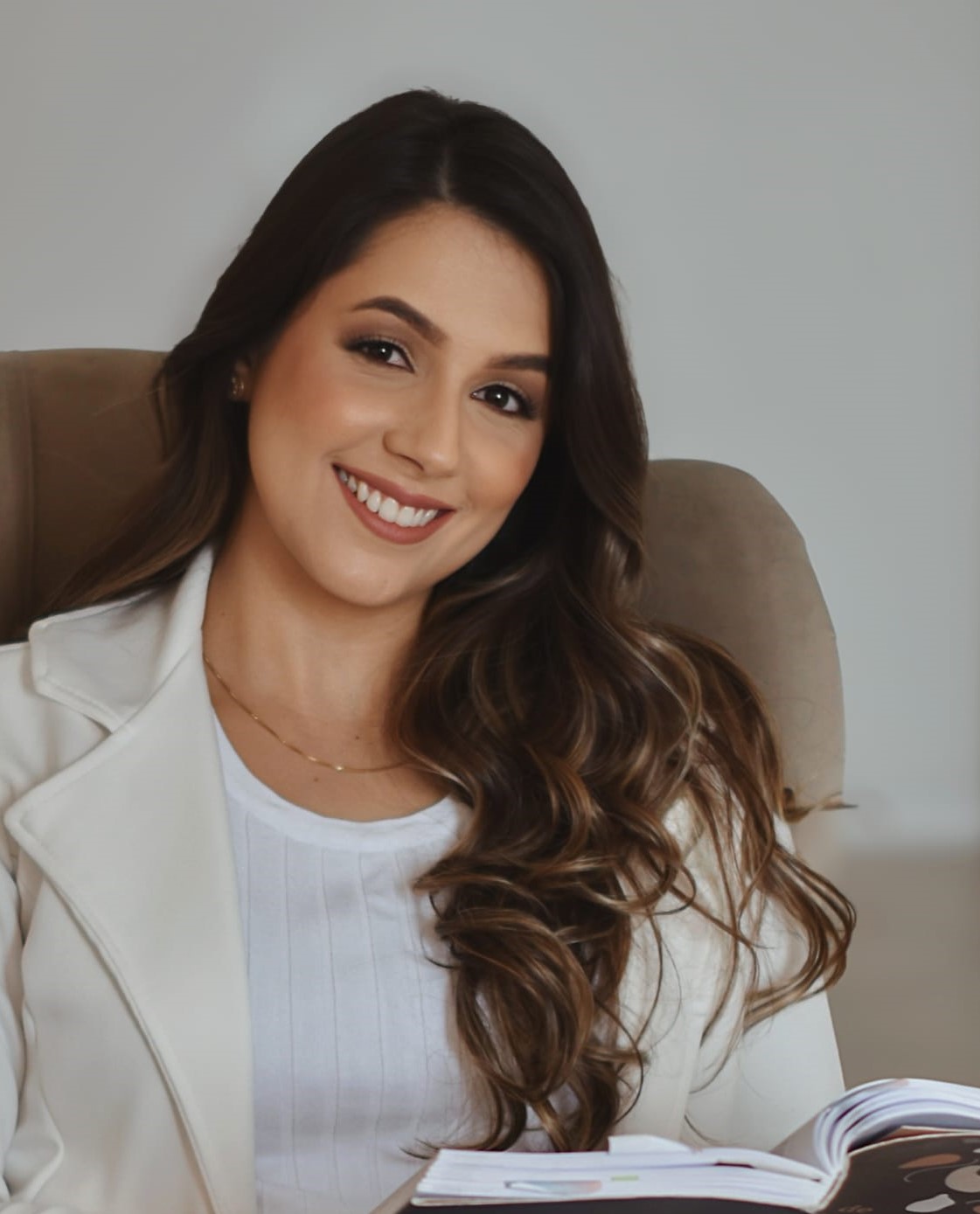
Brazil Dissemination Activities 2025Carolina Monteiro da Silva
Could you please tell us a little about you and your background?
I’m Carol, a Brazilian psychologist from Rio Grande do Sul with 7 years of clinical experience, working with adolescents and adults through Acceptance and Commitment Therapy. Since 2023, I’ve been a member of the SIG ACT Brazil, where I co-coordinate a Study Group project for the community alongside other colleagues. I am currently pursuing my Master’s in Psychology, and my dissertation focused on the effects of an ACT-based program on the Psychological Flexibility of high school students. I truly enjoy working with adolescents, both in the classroom through school projects and in clinical practice! My goal is to increasingly bring ACT into the school context, moving beyond the clinic.
How did you become interested in CBS?
At the beginning of my clinical career, I studied and used third-wave approaches of Cognitive Behavioral Therapy. In the midst of my studies, I found ACT, which I fell in love with; I saw that it made a lot of sense for my practice and fulfilled many things I felt were missing in my sessions! That’s when I gradually discovered Contextual Behavioral Science, found the SIG ACT, and joined WhatsApp groups. I kept studying, connecting with more and more professionals in the field on social media, and meeting incredible people. At a certain point, I found myself attending SIG meetings, volunteering to be part of a Study Group project, and joining the ACBS!
Could you tell us about your research and application interests?
I am currently finalizing my Master's dissertation, which focuses on ACT with adolescents in the school context. The objective was to evaluate the effects of an ACT-based program on the Psychological Flexibility of high school students at a military school. In addition, I am conducting a complementary study for the translation and adaptation of the Self-as-context Scale into Brazilian Portuguese. Therefore, my research interests are related to ACT and, especially, its application in contexts beyond clinical practice.
Could you tell us about your experience at the World Conference this year?
It was a unique experience! I was able to attend my first conference through the scholarship, and I am so grateful for that opportunity. Without a doubt, I would summarize my experience in two words: connection and belonging. It was an honor to be with people I only knew virtually; it was an honor to listen to and learn from individuals who are so important in my journey, and to meet so many others doing incredible work in different parts of the world. I was able to connect, learn new things for my practice, and have experiences that touched me deeply. I was moved at many moments and had a lot of fun, too! But I believe what stayed with me the most throughout the entire event was the sense of belonging!
Was there anything that stood out to you about the CBS community?
What struck me the most was how welcoming the people in the community are. Speaking in another language was challenging for me, as I had never been outside of my country before. However, even during exchanges with people from different parts of the world, I felt welcomed and felt that the language was not a barrier. We truly can connect and, without a doubt, there is a shared humanity!
What did you take back from your experience that has been helpful to you?
I learned several things that I could apply in practice; from various workshops, I was able to take away important lessons to use in my sessions, and I even managed to bring some of those insights to the Study Group. But what stood out the most, without a doubt, was the reinforcement of how important it is to look at the individual beyond protocols or generalizations—to see that person as unique in their own psychological processes.
Do you have anything else that you would like to share with the community?
I believe that as our community grows, we will have more opportunities to bring Contextual Behavioral Science to different contexts and populations! I see that being part of this community makes me a better professional every day and brings me closer to being able to promote and create projects for students and professionals in the field. This has been our mission at the SIG ACT—to ensure more people know about and can strengthen our CBS! Participating in this event undoubtedly transformed my experience in the community and only reinforced the sense of belonging. I will certainly make every effort to participate in more ACBS conferences and events.
Egypt Dissemination Activities 2025
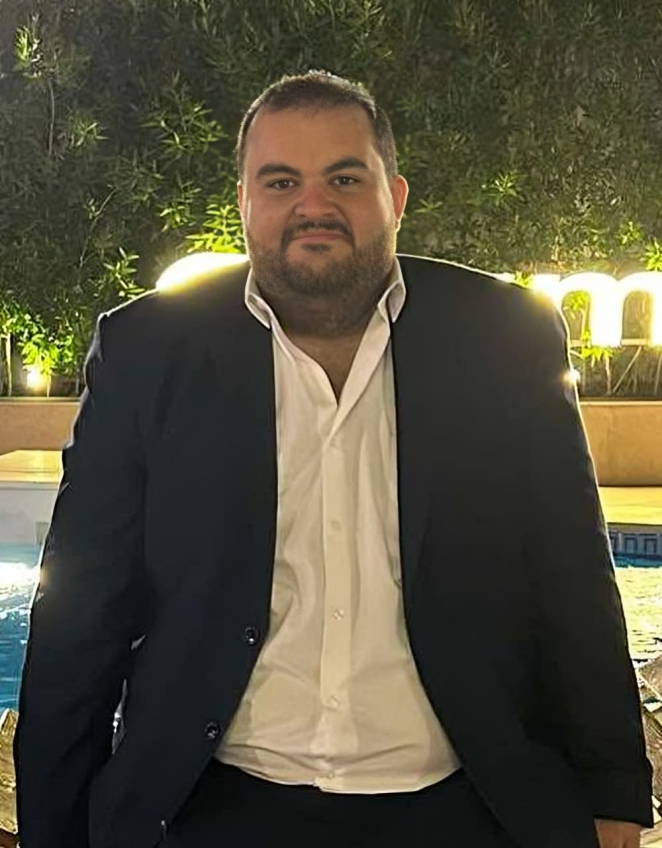
Egypt Dissemination Activities 2025Mohamed Elemam
Could you please tell us a little about you and your background?
I am a recent graduate from a basic and applied psychology undergraduate program. I currently hold several roles as a learning and development specialist, university teaching assistant, and a research lab coordinator. Across these roles, my work has been driven by functional contextual frameworks, including work on ACT, personality, cognition, emotions, and process-based therapy.
How did you become interested in CBS?
My interest in CBS grew from a period where I was frustrated by the detachment of diagnostic systems, assessments, and associated research and capital-T-truth claims from the practical, lived experiences of individuals (myself included) and what actually facilitates meaningful change. Something felt amiss. Around that time, I was introduced to functional contextualism, ACT, RFT, and PBT, which, to me, seemed to bring coherence and bridge the gap between rigorous research and meaningful evidence-based practice.
Could you tell us about your research and application interests?
My L&D work has been focused on designing accessible learning experiences in Arabic for individuals, clinicians, and organizations that is grounded in functional contextual philosophy and evidence-based psychology practices. An example of this is a training program where we integrated the Big Five personality factors within a contextual framework as a vehicle for fostering openness and self-understanding, which served as a foundation for later values-based work and action planning.
On the other hand, my research focuses on idionomics and the feasibility of idiographic methods within the Egyptian context. My interests mainly lie at the intersection of clinical psychology and cognition; specifically, my thesis involved an idiographic examination of how mobile cognitive training influences attentional, affective, and overt behavior processes among individuals experiencing ADHD symptoms.
Could you tell us about your experience at the World Conference this year?
I attended the workshop titled "Focused Acceptance and Commitment Therapy: Increasing the Reach of Contextual Behavioral Science to Novel Settings and New Populations." The sessions continuously bridged theory and practice, addressing the application of ACT core processes within brief intervention models, the rising necessity for such approaches in modern healthcare, and recent developments in the FACT approach.
Throughout the workshop, the potential of FACT in reaching wider, and even underserved, populations and more diverse contexts became increasingly evident. Additionally, it was particularly eye-opening to learn brief tools to shift processes that I had perceived as typically requiring long-term interventions to change. Overall, the sessions provided clarity on the nuances of specific concepts, views, and practices related to the ACT processes, including experiential avoidance, acceptance, and committed action.
Was there anything that stood out to you about the CBS community?
What stood out the most to me was the wide range of backgrounds and professional interests within the community. While every person worked in different context and in different specializations, there was a profound sense of unity. Despite these different professional contexts, everyone was equally welcoming and friendly. It was inspiring to be among such a diverse group of people, each of whom had their own meaningful reason to be there and grow.
What did you take back from your experience that has been helpful to you?
It was mainly the approach to integrating ACT briefly and flexibly in different contexts. There have been several cases where while designing a workshop or planning a lecture, we aim to incorporate values work or acceptance strategies without detracting from the primary focus topic, and FACT has been invaluable for this. Since the conference, I have been using approach and skills I learned to find avenues for meaningful conversations and change, even in brief interactions.
Türkiye Dissemination Activities 2025 - Virtual attendance
Türkiye Dissemination Activities 2025 - Virtual attendanceGüler Arslantas
Could you please tell us a little about you and your background?
My name is Güler and I'm a Master's student from Istanbul Turkey. I completed my course year in 2025 and am writing my thesis on loneliness among international students and how FAP based group activities may help improve their wellbeing. I completed my undergraduate at Deakin University, Victoria, Australia as a recipient of Deakin International Scholarship. I did my honours at Australian Catholic University and my thesis was related rACC volume and impulsivity in cannabis users and non-using controls. I was selected for Dean's Commendation.
How did you become interested in CBS?
My first introduction to CBS was through ACT. When I was an honours student, I had the opportunity to take a class on psychological interventions. ACT was the school of therapy to which I felt closest due to its emphasis on acceptance, which I used to (and still do sometimes) struggle at the time. The hexagon enabled me to reframe my own life and mindset and help me point out what it was with which I was truly struggling. It helped me create a roadmap for myself. And while reading resources about ACT, I felt this immense joy which made me grateful to be in the field that I am. I think it made me fall in love with research and the vast potential of clinical psychology.
Could you tell us about your research and application interests?
Currently, I am more interested in Functional Analytic Psychotherapy as its flexibility is what speaks to me the most. I want to be able to more in tune with the clues that appear within the therapy session and have the courage to act on them. I have been taking supervision for about a year now (ACT and psychodynamic therapy) and I noticed that I had some inhibitions acting upon some instincts that appear during the therapeutic process. I wanted to become better verse in FAP and its rationale to help me be more courageous. And it definitely helped me get to know myself better and view my relationships in a different light. It added so much to the intimacy and I started to feel more at ease with being more active in my relationships.
I want to further my studies in the field of substance use in the future, starting from my doctorate. I would like to be able to contribute to research which aims to better the conditions of in-patients and how I can improve the therapeutic process for them. At the moment I am more interested in the practical side of the therapeutic process but for the last few months upon familiarising myself more with the verbal behaviour and its functions, I have started to develop an interest in the function of language mainly in pathology but also in different contexts such as how would RFT relate to sign language and idiosyncratic sign language dialects among minorities.
Could you tell us about your experience at the World Conference this year?
I did not attend the World Conference in person but I was offered a scholarship for one of the virtual workshops. It was titled, Now What? Moving Beyond the Basics and Increasing your Fluency in ACT, Miranda Morris, Ph.D., Shawn Costello Whooley, Psy.D. and Holly Yates, Ms., MA, LCMHC.
First and foremost, all instructors were so open and approachable. They were not reluctant to share their professional experience which to a green psychotherapist candidate like myself was priceless. They offered detailed explanations about which theoretical foundations ACT stood on and how therapists could approach a problem with the psychological flexibility model. With their examples and the fantastic roleplays, I gained a deeper understanding of how to be more flexible myself as a therapist. During the roleplays, for example, I imagined myself in the therapist's shoes and when I started to feel at unease, the instructors introduced another path which enabled the therapy to flow into directions I was blind to prior. Sometimes they were themselves in the roleplays, meaning they were being human. It had never occurred to me in those moments to use my inner reflections as an intervention. The reassuring aspect of it was that it seemed to work. It motivated me a lot to be in the therapy room as a practitioner and eased my nerves about getting my professional career started.
Was there anything that stood out to you about the CBS community?
The solidarity and helpfulness. CBS community is the most helpful professional community I ever had the chance to be a part in. The members I spoke to are so honest about their own stories that it completely erases any discomfort one may have about meeting new people. They are very supportive and not reluctant to share professional guidance and this makes the experience of learning so much more joyful. The vastness of available resources in different languages and the correspondence going over SIG lists offer a very enriching development.
What did you take back from your experience that has been helpful to you?
This may not be closely related to my development as a therapist but the workshop motivated me to work harder and become someone who could give to the community like the instructors. I wanted to educate myself thoroughly in topics that interested me and equip myself well in the school that I felt close to (CBS based interventions) so that I could also motivate younger generations of practitioners and help them overcome their own nervousness like me.
Apart from this, they introduced me to great scholars like Mark Dixon and research on why clinical work works and why it matters. These expanded my horizon and although it made me feel a bit intimidated with how much more to learn there was, I noticed that there were so many areas that I could spend the rest of my life exploring.
Türkiye Dissemination Activities 2025
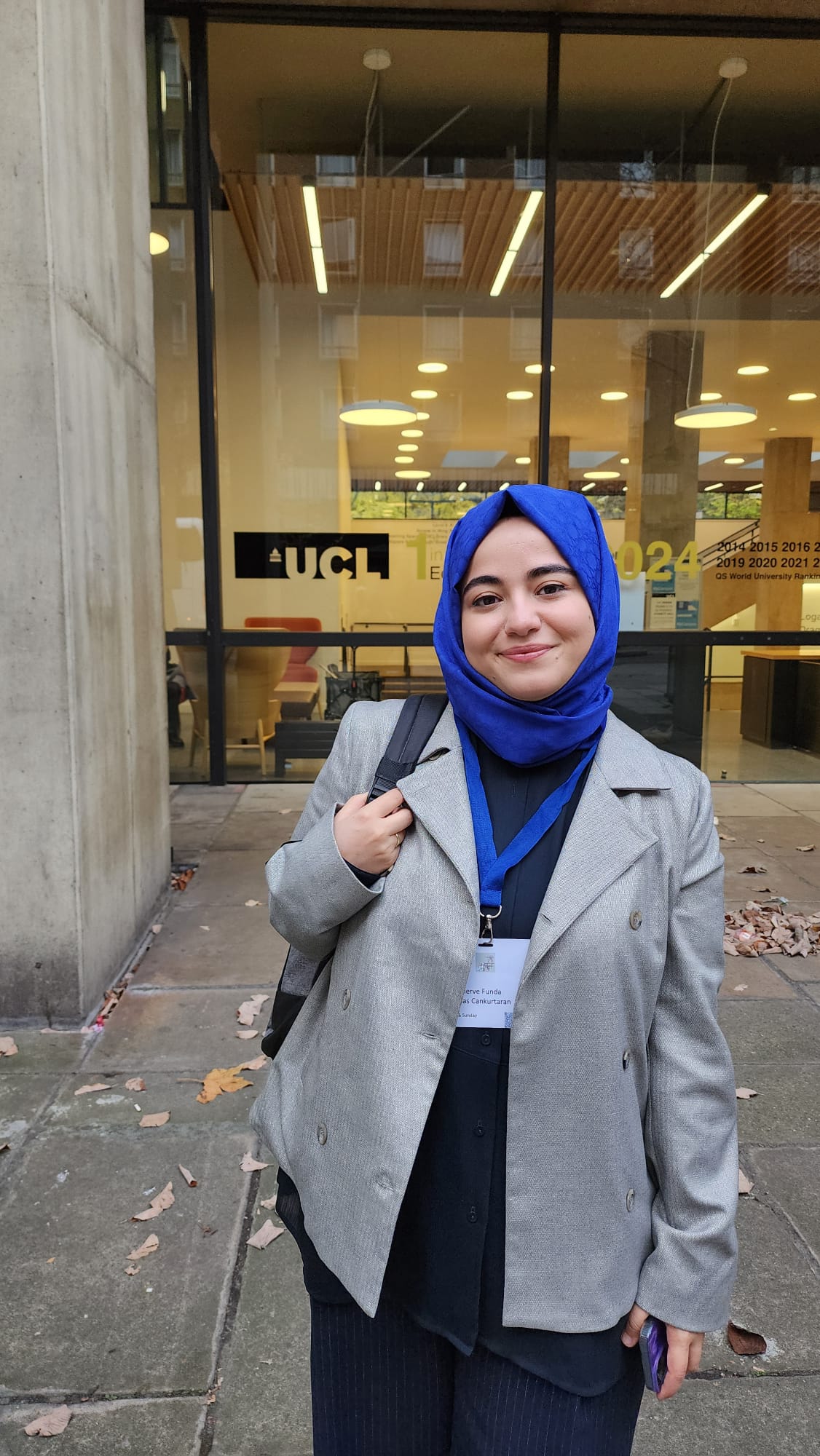
Türkiye Dissemination Activities 2025Merve Funda Kırbaş Cankurtaran
Could you please tell us a little about you and your background?
I am a clinical psychologist based in Turkey, with a strong interest in contextual behavioral science, particularly Acceptance and Commitment Therapy (ACT) and Relational Frame Theory (RFT). I completed my clinical psychology master’s training while actively engaging in research, clinical practice, and interdisciplinary projects that integrate psychology with sociology, and cultural studies.
Alongside my clinical work, I have research experience with institutions such as TÜBİTAK, University College Dublin, and Boğaziçi University, and I previously worked in Louise McHugh’s lab at UCD, focusing on RFT and contextual approaches to self and psychological flexibility. My professional interests center on applying ACT in culturally sensitive ways and exploring how creative and art-based processes can support psychological flexibility, especially in group and community settings. I am particularly motivated to contribute to the ACT community by bridging clinical practice, research, and social context, and by adapting contextual approaches to diverse cultural environments.
How did you become interested in CBS?
My interest in Contextual Behavioral Science deepened during my Acceptance and Commitment Therapy training in Turkey, particularly through the combination of theoretical education, clinical practice, and supervision. Throughout this process, working with leading ACT practitioners in Turkey such as Professor Fatih Yavuz, Dr. Ahmet Nalbant, and Dr. Fatma Betül Esen helped me strengthen the way I connect with clients, clinical material, and real-life events in therapy.
This perspective was further enriched by my experiences in Ireland, where working with Professor Louise McHugh and Dr. Conor McColosey supported my understanding of CBS from a research-driven and contextual standpoint. Their approaches helped me integrate theory, language, and lived experience in a more coherent and flexible way.
Beyond its clinical applications, CBS resonates deeply with my broader worldview. Its contextual and functional philosophy offers a profound framework not only for understanding individuals, but also for making sense of social systems, culture, and human behavior more broadly. Through CBS, I have developed a more inclusive, flexible, and compassionate perspective one that has shaped not only my work as a therapist, but also the way I relate to society and the world as a whole.
Could you tell us about your research and application interests?
My research and application interests focus on art-based group interventions informed by Contextual Behavioral Science and Acceptance and Commitment Therapy. I am particularly interested in how creative and experiential processes can be used in group settings to support psychological flexibility and values-based action.
In my master’s thesis, I examine the relationship between social anxiety and relationship satisfaction, with psychological flexibility, perceived social support, and perceived partner responsiveness as mediating variables, while also considering attachment styles. This work has strengthened my interest in interpersonal and relational contexts.
In applied settings, I am motivated to develop ACT informed group programs that integrate art-based methods as contextual tools, helping individuals relate differently to their internal experiences while fostering shared and non-pathologizing group processes.
Could you tell us about your experience at the World Conference this year?
Attending the World Conference this year was both inspiring and eye-opening for me. Alongside the academic content, I had the opportunity to see how contextual behavioral science is applied within a large organizational and corporate setting. Observing CBS principles in action beyond therapy and academia particularly in organizational development and entrepreneurial contexts helped me better understand the broader applicability of these theories and philosophies.
This experience also reinforced my interest in translating CBS into creative, group-based, and community-oriented applications. Seeing how contextual approaches can support meaningful change at systemic levels strengthened my motivation to explore interventions that integrate art-based group work with CBS principles, aiming for social impact as well as individual psychological well-being.
Was there anything that stood out to you about the CBS community?
What stood out to me most about the CBS community was its strong commitment to inclusivity and accessibility. I was deeply impressed by the efforts of both researchers and conference organizers to create space for people from different countries, educational backgrounds, and economic circumstances. This intentional openness made the community feel genuinely welcoming rather than exclusive.
I personally feel very fortunate to have benefited from this approach. I noticed the same spirit of acceptance and contextual awareness at conferences in the UK and Ireland as well. Without this shared commitment to viewing participation through a contextual lens, accessing these opportunities would likely have been much more difficult for me. This experience reinforced my appreciation of CBS not only as a scientific framework, but as a values-driven community that actively practices what it teaches.
What did you take back from your experience that has been helpful to you?
This experience gave me greater confidence in the work I am doing in Turkey. Seeing how CBS principles are not only theoretically sound but also practical, applicable, and impactful for people’s well-being helped me trust that this approach can create meaningful change beyond individual therapy. It also helped me recognize how contextual principles can be translated into organizational and institutional settings.
Meeting professionals who are actively applying CBS in diverse contexts gave me courage and opened new perspectives for my own work. Equally importantly, the conference supported me in sharing these insights with colleagues in Turkey who are part of similar professional and interdisciplinary networks. Overall, this experience expanded my vision and strengthened my motivation to contribute to the dissemination of CBS in accessible and contextually responsive ways.
Do you have anything else that you would like to share with the community?
I would first like to express my sincere gratitude to the CBS and ACT community in Turkey. The mentorship, guidance, and collective efforts within this community helped open pathways that made it possible for me to engage with CBS both locally and internationally. Being part of such a supportive and collaborative environment has been an important foundation for my professional development.
I would also like to express my sincere gratitude to the broader CBS community for its openness, generosity, and commitment to inclusion. Being part of a community that actively creates space for diverse voices, contexts, and lived experiences has been deeply meaningful to me.
I am eager to continue learning from and contributing to this community, particularly through collaborative, group-based, and creative applications of CBS that aim to support psychological well-being across different cultural and social contexts. I look forward to staying connected and growing together.