Türkiye Dissemination Activities 2025
Türkiye Dissemination Activities 2025Merve Funda Kırbaş Cankurtaran
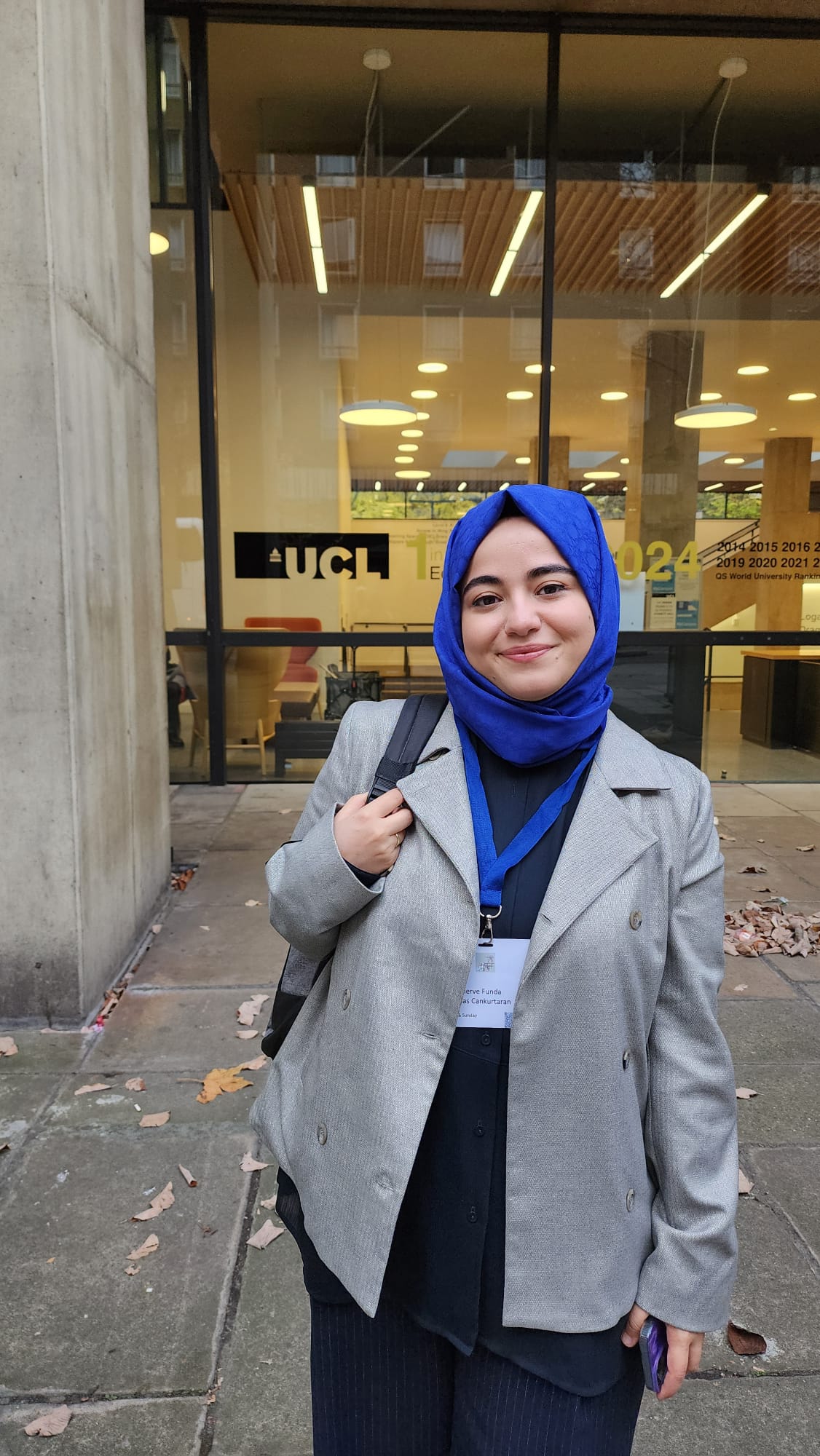
Could you please tell us a little about you and your background?
I am a clinical psychologist based in Turkey, with a strong interest in contextual behavioral science, particularly Acceptance and Commitment Therapy (ACT) and Relational Frame Theory (RFT). I completed my clinical psychology master’s training while actively engaging in research, clinical practice, and interdisciplinary projects that integrate psychology with sociology, and cultural studies.
Alongside my clinical work, I have research experience with institutions such as TÜBİTAK, University College Dublin, and Boğaziçi University, and I previously worked in Louise McHugh’s lab at UCD, focusing on RFT and contextual approaches to self and psychological flexibility. My professional interests center on applying ACT in culturally sensitive ways and exploring how creative and art-based processes can support psychological flexibility, especially in group and community settings. I am particularly motivated to contribute to the ACT community by bridging clinical practice, research, and social context, and by adapting contextual approaches to diverse cultural environments.
How did you become interested in CBS?
My interest in Contextual Behavioral Science deepened during my Acceptance and Commitment Therapy training in Turkey, particularly through the combination of theoretical education, clinical practice, and supervision. Throughout this process, working with leading ACT practitioners in Turkey such as Professor Fatih Yavuz, Dr. Ahmet Nalbant, and Dr. Fatma Betül Esen helped me strengthen the way I connect with clients, clinical material, and real-life events in therapy.
This perspective was further enriched by my experiences in Ireland, where working with Professor Louise McHugh and Dr. Conor McColosey supported my understanding of CBS from a research-driven and contextual standpoint. Their approaches helped me integrate theory, language, and lived experience in a more coherent and flexible way.
Beyond its clinical applications, CBS resonates deeply with my broader worldview. Its contextual and functional philosophy offers a profound framework not only for understanding individuals, but also for making sense of social systems, culture, and human behavior more broadly. Through CBS, I have developed a more inclusive, flexible, and compassionate perspective one that has shaped not only my work as a therapist, but also the way I relate to society and the world as a whole.
Could you tell us about your research and application interests?
My research and application interests focus on art-based group interventions informed by Contextual Behavioral Science and Acceptance and Commitment Therapy. I am particularly interested in how creative and experiential processes can be used in group settings to support psychological flexibility and values-based action.
In my master’s thesis, I examine the relationship between social anxiety and relationship satisfaction, with psychological flexibility, perceived social support, and perceived partner responsiveness as mediating variables, while also considering attachment styles. This work has strengthened my interest in interpersonal and relational contexts.
In applied settings, I am motivated to develop ACT informed group programs that integrate art-based methods as contextual tools, helping individuals relate differently to their internal experiences while fostering shared and non-pathologizing group processes.
Could you tell us about your experience at the World Conference this year?
Attending the World Conference this year was both inspiring and eye-opening for me. Alongside the academic content, I had the opportunity to see how contextual behavioral science is applied within a large organizational and corporate setting. Observing CBS principles in action beyond therapy and academia particularly in organizational development and entrepreneurial contexts helped me better understand the broader applicability of these theories and philosophies.
This experience also reinforced my interest in translating CBS into creative, group-based, and community-oriented applications. Seeing how contextual approaches can support meaningful change at systemic levels strengthened my motivation to explore interventions that integrate art-based group work with CBS principles, aiming for social impact as well as individual psychological well-being.
Was there anything that stood out to you about the CBS community?
What stood out to me most about the CBS community was its strong commitment to inclusivity and accessibility. I was deeply impressed by the efforts of both researchers and conference organizers to create space for people from different countries, educational backgrounds, and economic circumstances. This intentional openness made the community feel genuinely welcoming rather than exclusive.
I personally feel very fortunate to have benefited from this approach. I noticed the same spirit of acceptance and contextual awareness at conferences in the UK and Ireland as well. Without this shared commitment to viewing participation through a contextual lens, accessing these opportunities would likely have been much more difficult for me. This experience reinforced my appreciation of CBS not only as a scientific framework, but as a values-driven community that actively practices what it teaches.
What did you take back from your experience that has been helpful to you?
This experience gave me greater confidence in the work I am doing in Turkey. Seeing how CBS principles are not only theoretically sound but also practical, applicable, and impactful for people’s well-being helped me trust that this approach can create meaningful change beyond individual therapy. It also helped me recognize how contextual principles can be translated into organizational and institutional settings.
Meeting professionals who are actively applying CBS in diverse contexts gave me courage and opened new perspectives for my own work. Equally importantly, the conference supported me in sharing these insights with colleagues in Turkey who are part of similar professional and interdisciplinary networks. Overall, this experience expanded my vision and strengthened my motivation to contribute to the dissemination of CBS in accessible and contextually responsive ways.
Do you have anything else that you would like to share with the community?
I would first like to express my sincere gratitude to the CBS and ACT community in Turkey. The mentorship, guidance, and collective efforts within this community helped open pathways that made it possible for me to engage with CBS both locally and internationally. Being part of such a supportive and collaborative environment has been an important foundation for my professional development.
I would also like to express my sincere gratitude to the broader CBS community for its openness, generosity, and commitment to inclusion. Being part of a community that actively creates space for diverse voices, contexts, and lived experiences has been deeply meaningful to me.
I am eager to continue learning from and contributing to this community, particularly through collaborative, group-based, and creative applications of CBS that aim to support psychological well-being across different cultural and social contexts. I look forward to staying connected and growing together.